Long-haul trucking often means spending extended periods on the road, sometimes days or even weeks away from home. During this time, drivers still rely on essential electronic devices such as microwaves, laptops, refrigerators, coffee makers, and phone chargers. Since most of these appliances require AC power while a truck battery provides DC power, a power inverter for semi truck becomes a crucial component of the electrical system.
Choosing the best power inverter for semi truck ensures reliable power, improved comfort, and safe operation of your electronics while traveling. In this guide, we’ll explain why truck drivers need an inverter, how it works in a semi truck, and how to select the right model for your needs.
Why do You Need a Power Inverter for Semi Truck
A semi truck’s electrical system typically operates on 12V or 24V DC power supplied by the vehicle’s battery and alternator. However, most household appliances and electronic devices run on 120V AC power. Without a power inverter, these devices cannot function directly from the truck’s electrical system.
A power inverter solves this problem by converting DC electricity into AC electricity, allowing truck drivers to use standard appliances inside the cab or sleeper berth.
There are several key reasons why truck drivers install inverters:
Comfort During Long Trips
Long-haul drivers often spend hours resting in their sleeper cabs. A power inverter allows them to run everyday appliances such as microwaves, electric kettles, mini refrigerators, coffee makers, and televisions, making life on the road far more comfortable.
Power for Work and Communication
Beyond convenience, reliable electricity is also essential for business operations. Electronic Logging Devices (ELDs) must remain powered to maintain regulatory compliance, while smartphones, GPS units, and dispatch systems require constant charging. Many owner-operators also manage billing, route planning, and paperwork on laptops, making a stable power supply critical.
Reduced Idling and Emergency Backup
Instead of idling the truck engine to power devices, drivers can rely on an inverter and battery system, reducing fuel consumption, noise, and engine wear. In addition, an inverter can serve as a backup power source during unexpected stops or roadside emergencies.
How Does a Power Inverter Work in a Semi Truck
Power inverter serves as a translator between a truck's electrical system and household devices, converting DC electricity from the truck’s battery into AC power that can run household appliances.
The process typically involves three main stages:
Step Up the Voltage
The process begins when the inverter draws low-voltage DC power from the truck’s battery system, typically 12V or 24V. An internal DC-to-DC converter then boosts this voltage to a higher level, preparing the electricity for AC generation.
Convert DC to AC
After the voltage has been stepped up, the inverter pulls DC electricity and uses high-speed electronic switches (MOSFETs) to flip the direction of the current back and forth. By switching thousands of times per second, the circuit converts DC electricity into an alternating waveform, forming the basic AC signal required by most electrical devices.
Smooth the Waveform
Finally, filters and control circuits smooth the waveform created during switching. Basic inverters produce a Modified Sine Wave, which works for simple appliances. Higher-quality models generate a Pure Sine Wave, closely matching grid electricity and providing cleaner, more stable power for sensitive electronics.
With this setup, a semi truck can safely power appliances like microwaves, coffee makers, refrigerators, laptops, and entertainment systems, effectively turning the sleeper cab into a small mobile living space.
How to Find the Best Power Inverter for Semi Truck
Finding the right power inverter for a semi-truck is about more than just plugging in a laptop; it’s about balancing the technical limits of your truck’s electrical system with the daily comforts of life on the road.
To choose the best power inverter for semi truck, you should focus on these six critical areas:
DC Voltage
Since a power inverter draws power directly from the truck battery, its DC input voltage must match the truck’s electrical system.
Most semi trucks in North America operate on 12V electrical systems, including many Class 8 trucks. These vehicles often use multiple Group 31 batteries wired in parallel, which increases current capacity while keeping the system voltage at 12V.
However, some modern sleeper trucks, particularly certain Volvo and Freightliner models equipped with factory-installed APUs (Auxiliary Power Units), may use 24V systems.
If you are unsure, consult the truck’s manual or ask a mechanic. Verifying the voltage before purchasing helps ensure the inverter will work correctly and prevents costly ordering mistakes.
Wattage
To determine how many watt inverter for semi truck you must calculate your load based on the specific devices you plan to run. The inverter must be able to handle the total power consumption of all devices you plan to run inside the cab.
When evaluating inverter capacity, two important specifications must be considered: continuous power and surge power.
Continuous power refers to the amount of electricity an inverter can supply steadily during normal operation. This is the power required to keep appliances running.
Surge power, on the other hand, is the short burst of power some devices need when they first start. Appliances with motors or heating elements, such as refrigerators or microwaves, can briefly draw significantly more power than their rated running wattage.
For common appliances used in a semi truck, a typical power demand may look like this:
| Device | Running Power | Surge Power |
|---|---|---|
| Laptop | 80W | 100W |
| Mini refrigerator | 150W | 600W |
| Microwave | 1000W | 1200W |
| Coffee maker | 600W | 700W |
In this example, the total running load is about 1830W, which is close to 2000W.
However, a 2000W power inverter may not be sufficient for this semi truck once factors such as inverter efficiency losses and startup surges are considered. For this reason, it is always recommended to add a 20–30% safety margin when selecting an inverter.
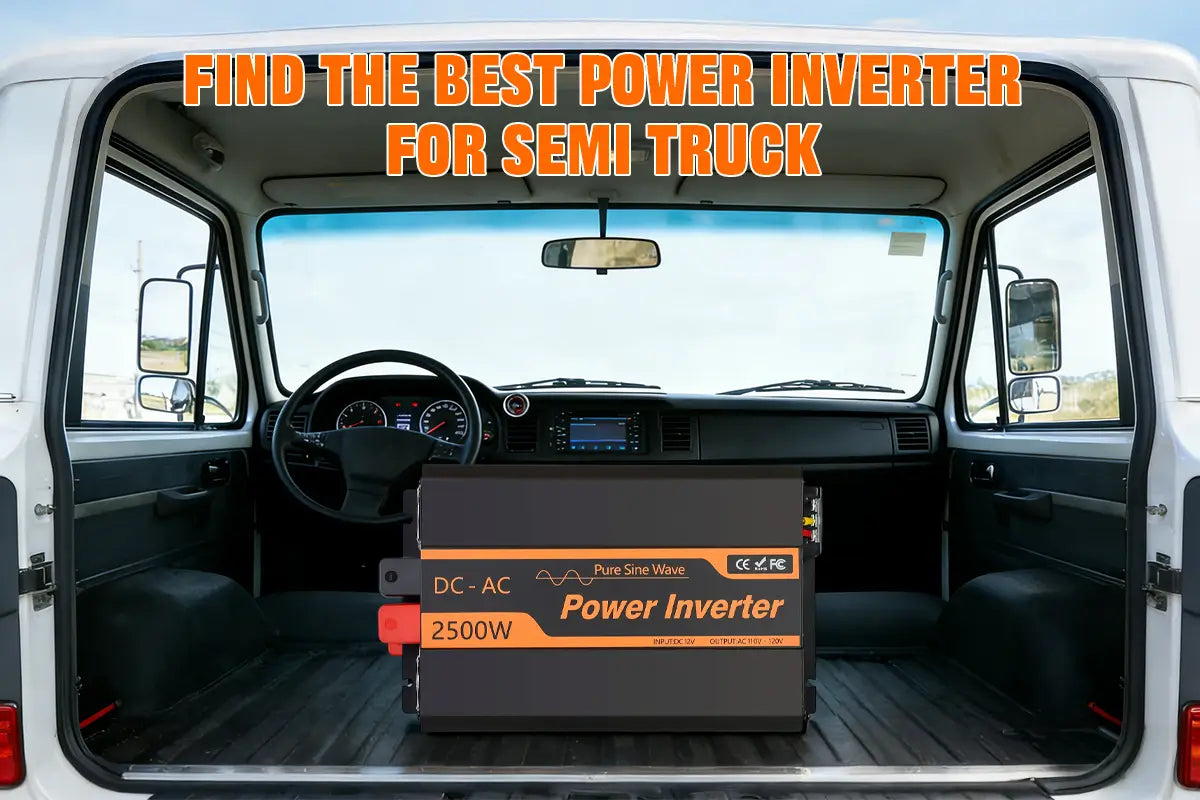
For most semi truck setups, a 2500W power inverter provides a practical and reliable solution. It offers enough continuous power for common appliances while leaving extra capacity to handle short startup surges.
In addition to continuous power, it is also important to check the inverter’s surge capacity. Many quality inverters provide surge ratings that are two times their continuous power, allowing them to safely handle the brief startup spikes required by appliances like refrigerators or microwaves.
AC Voltage
Most appliances used in semi trucks are designed for 120V AC, which is the standard household voltage in North America. Therefore, the inverter you choose should provide stable 120V AC output to ensure compatibility with common devices such as microwaves, laptops, coffee makers, and refrigerators. Some inverters also support split-phase output, which provides two 120V lines that can be combined to deliver 240V AC.
In other regions such as Europe, appliances typically operate at 220–230V AC, so the inverter must match the local voltage standard if you plan to use those devices.
Additionally, choosing a pure sine wave inverter is highly recommended. Pure sine wave power closely replicates utility grid electricity and provides cleaner, more stable power for sensitive electronics such as laptops, CPAP machines, and televisions.
Safety Protection
The best power inverter for semi truck should include multiple protection systems to safeguard both the inverter and connected devices.
Key protections include overload protection, which shuts down the inverter if the load exceeds its capacity; overheat protection, which prevents damage from excessive temperature; short circuit protection, which guards against wiring faults; and low voltage protection, which stops the inverter from draining the truck battery too deeply.
Most high-power inverters also include temperature-controlled cooling fans to maintain stable performance during heavy loads.
Number of Outlets and USB Ports
While it may seem like a minor detail, the physical interface of the inverter directly affects daily convenience. For example, a PowMr 2500W power inverter is equipped with two AC outlets and one USB port, which is generally sufficient for entry-level setups.

However, if multiple appliances need to run at the same time, many drivers prefer a permanent inverter installation connected directly to the truck’s electrical system. This allows the inverter to power additional outlets inside the cab, making it easier to operate several devices simultaneously.
Installation Types
Small inverters (under 300W) can often plug directly into a 12V accessory outlet or cigarette lighter socket. However, these are insufficient for anything beyond a phone or a very small tablet.
For a semi truck, a hardwired installation is the industry standard. Hardwiring involves running thick-gauge copper cables directly from the battery bank to the inverter, passing through the floor of the cab.
Pro-Tip: The Shore Power Bypass
If you frequently stay at terminals or lots with hookups, look for an inverter charger. This allows the unit to automatically switch from battery power to "shore power" when you plug into an external outlet, while simultaneously charging your house batteries.