An off grid solar system operates independently from the traditional electrical grid, generating and storing solar power for complete energy autonomy. As energy costs soar and climate concerns intensify, off-grid solar has become increasingly popular among homeowners seeking energy independence.
This comprehensive guide will demystify off-grid solar systems, covering essential components, sizing considerations, and helping you determine if this sustainable solution aligns with your energy needs and lifestyle goals.
What is an Off Grid Solar System
An off grid solar system is a completely autonomous power generation setup that operates without connection to the public electrical utility grid.
Unlike grid tied systems that can using electricity from the utiity and sell excess power back to utilities, off-grid systems store all generated energy in batteries for later use. These systems provide complete energy independence but require careful sizing and management to ensure reliable power supply.
Off grid solar systems allow you to be fully independent from the utility grid, providing reliable power even in remote locations while reducing environmental impact.
The 5 Essential Components of an Off Grid Solar System
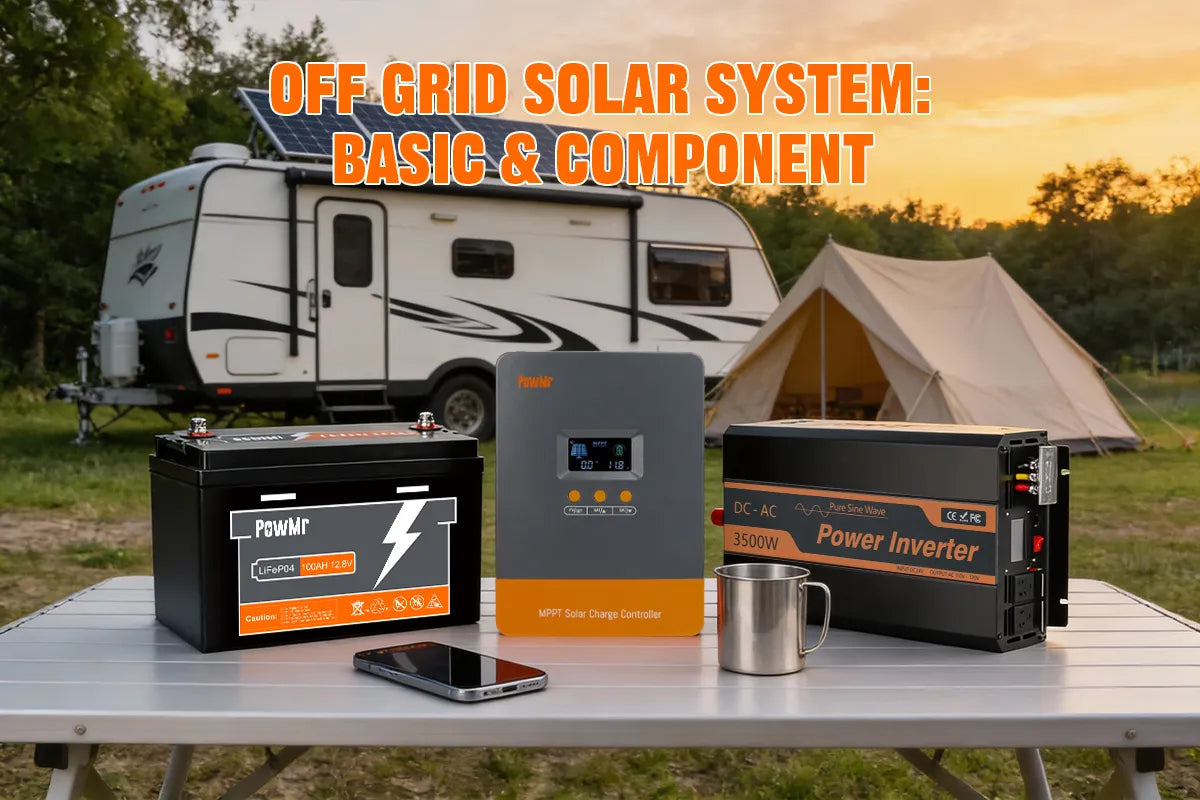
Every functional off-grid solar system requires five critical components working in harmony:
1. Solar Panels
Solar panels convert sunlight into DC electricity. Monocrystalline offers highest efficiency (20-22%) but costs more. Polycrystalline provides good balance (15-17%) at lower cost. Bifacial design increases efficiency by capturing light from both sides.
For mobile scenarios like RVs and camping, flexible solar panels using thin-film are popular because they're lightweight, conform to curved surfaces, and withstand travel vibrations.
2. Battery Bank
The battery bank stores excess energy generated during peak sunlight hours for use during nighttime or cloudy periods. Lithium batteries are becoming the preferred choice due to their longer lifespan(up to 6000 cycles), higher depth of discharge (80-95%), and better efficiency compared to traditional lead-acid batteries.
3. Solar Charge Controller
The solar charge controller regulates the voltage and current flowing from solar panels to batteries, preventing overcharging and extending battery life. MPPT (Maximum Power Point Tracking) controllers are more efficient than PWM controllers, especially in varying weather conditions.
4. Power Inverter
The power inverter converts stored DC power from batteries into AC power that standard household appliances require. Pure sine wave inverters are recommended for sensitive electronics, while modified sine wave inverters work adequately for basic appliances.
5. Loads
The load represents all electrical devices your off-grid system powers to maintain daily life - lighting, refrigeration, electronics, and appliances. Notably, inductive loads with motors (refrigerators, pumps, washing machines) require inverters with high surge capacity due to their 3-9x higher starting currents compared to running power.
The Working Principle of Off Grid Solar System
1. Solar Energy Capture
Solar panels convert sunlight into DC electricity through photovoltaic cells. Peak production occurs during midday hours, with output varying based on weather conditions, seasonal changes, and panel orientation throughout the day.
2. DC Power Regulation
Charge controllers receive variable DC power from solar panels and regulate voltage/current flow. MPPT controllers optimize power extraction while providing protection against reverse current, overvoltage, and short circuits.
3. Battery Charging Process
The battery charging is also managed by the solar charge controller, which controls energy flows based on different battery chemistries through three charging stages: bulk charging for rapid power input, absorption stage maintaining voltage while reducing current, and float stage preventing overcharge and self-discharge.
4. Energy Storage
The battery, as an energy storage repository, stores excess solar power and releases it at night, on cloudy days, or during peak demand, ensuring uninterrupted supply and load balancing.
It stabilizes power quality, copes with adverse weather, and supports high-power equipment startup, making it the core of an off-grid system for autonomous operation and energy efficiency.
5. Power Conversion
Inverters convert DC power from batteries into high-quality AC electricity, providing pure sine wave output at 120V, 240V, split-phase, or three-phase configurations.
They regulate voltage and frequency, protect connected appliances, and handle peak power demands, making them essential for reliable, stable, and autonomous operation in off-grid solar energy systems.
6. Load Distribution
Smart inverters prioritize critical loads during low battery conditions. The system automatically manages power distribution, disconnecting non-essential loads when battery levels reach predetermined thresholds for protection.
The system works by capturing solar energy during daylight hours, storing it in batteries, and distributing it as needed through an inverter system. During cloudy days or extended periods of high energy consumption, backup generators may supplement the solar array to maintain power availability.
Off-Grid vs Grid-Tied: Key Differences
Pros & Cons of Off Grid Solar
Off grid solar systems deliver full energy independence without monthly utility bills and can operate in remote locations.
They are flexible, easy to assemble, and can be expanded or modified at any time without being affected by grid outages. Additionally, they provide significant environmental benefits.
However, they have limited power capacity, need more maintenance, incur battery replacement costs, and their reliability depends on weather conditions.
Pros & Cons of Grid Tied Solar
Grid tied solar systems connect to the utility network, drawing power from the grid, feeding excess energy back, and optionally connecting batteries for backup. Energy management can be configured for different goals, such as UPS functionality or net metering benefits.
On the downside, they still depend on the grid for continuous power, may incur connection fees, and offer less environmental impact reduction compared to fully off grid systems.
How to Size Your Off Grid Solar System
Step1. Calculate Your Daily Energy Consumption
Start by determining how much electricity your devices use each day. List all appliances, note their power rating (watts) and hours of use, then multiply to get daily energy in watt-hours.
- Add up all devices to find total daily consumption.
- This value is the basis for sizing batteries and solar panels.
Step2. Determine Battery Storage Capacity
Choose battery storage to cover several days without sun (autonomy). Consider battery type and depth of discharge (DoD) to avoid over-discharging.
- Formula: Battery Capacity = Daily Consumption × Autonomy ÷ DoD
- After calculating the total capacity and deciding the system voltage, you can determine the number of batteries needed to meet the required storage.
Step3. Size Your Solar Panels
Determine the solar array size based on daily consumption, system efficiency, and the peak sun hours of your location, which represents the average number of full-sun equivalent hours per day. This ensures the panels generate enough electricity even in your local climate.
- Formula: Solar Array Size (W) = Daily Consumption ÷ (Peak Sun Hours × System Efficiency)
- Adjust panel quantity according to your location's sun hours and round up for reliability.
Step4. Choose a Solar Charge Controller
The charge controller regulates the voltage and current from the solar panels to the batteries, preventing overcharging and protecting battery health. Proper selection ensures efficient charging and safe panel integration.
- The solar charge controller's maximum output current should not exceed the battery's maximum charging current to prevent damage.
- Ensure the controller can safely handle the maximum solar array power and the maximum input voltage from the panels.
Step5. Select a Appropriate Inverter
To ensure safe inverter operation, it must handle both the total continuous load and the peak surge from high-power appliances. Choose an inverter at least 30% larger than your total load, and make sure it can support surge currents from devices like refrigerators, water pumps, or other motor-driven appliances.
Is Off-Grid Solar Right for You?
Whether an off-grid solar system is right for you depends on your energy needs, lifestyle, and long-term goals, making it crucial to evaluate these factors before committing to a system.
It Makes Sense If:
- You're in a remote location: Ideal for rural homes, farms, cabins, or islands where grid access is limited or expensive.
- Energy independence matters: You control your energy production, avoid outages, and eliminate fluctuating electricity bills.
- Environmental impact is a priority: Off-grid solar uses renewable energy, cutting reliance on fossil fuels and reducing your carbon footprint.
- You're building new in rural areas: Easier and often cheaper to integrate solar during construction than connecting to a distant grid.
- Long-term savings appeal to you: While upfront costs are higher, eliminating recurring electricity bills makes off-grid systems cost-effective over time.
It Might Not Make Sense If:
- Grid power is reliable and affordable: Off-grid solar may not justify the cost if utility electricity is stable.
- You cannot maintain the system: Batteries and inverters require regular monitoring and care.
- Local regulations are restrictive: Some areas limit off-grid installations or battery storage.
- You plan a short-term stay: High upfront investment is best suited for long-term residents.
Conclusion
In conclusion, off-grid solar is ideal for those who value autonomy, sustainability, and self-reliance, particularly in remote or underserved locations. Proper planning, system sizing, and realistic expectations are essential to ensure consistent power supply, long-term savings, and a successful off-grid experience. By carefully evaluating your energy needs, environment, and technical capacity, you can decide if an off-grid solar system aligns with your lifestyle and long-term goals.