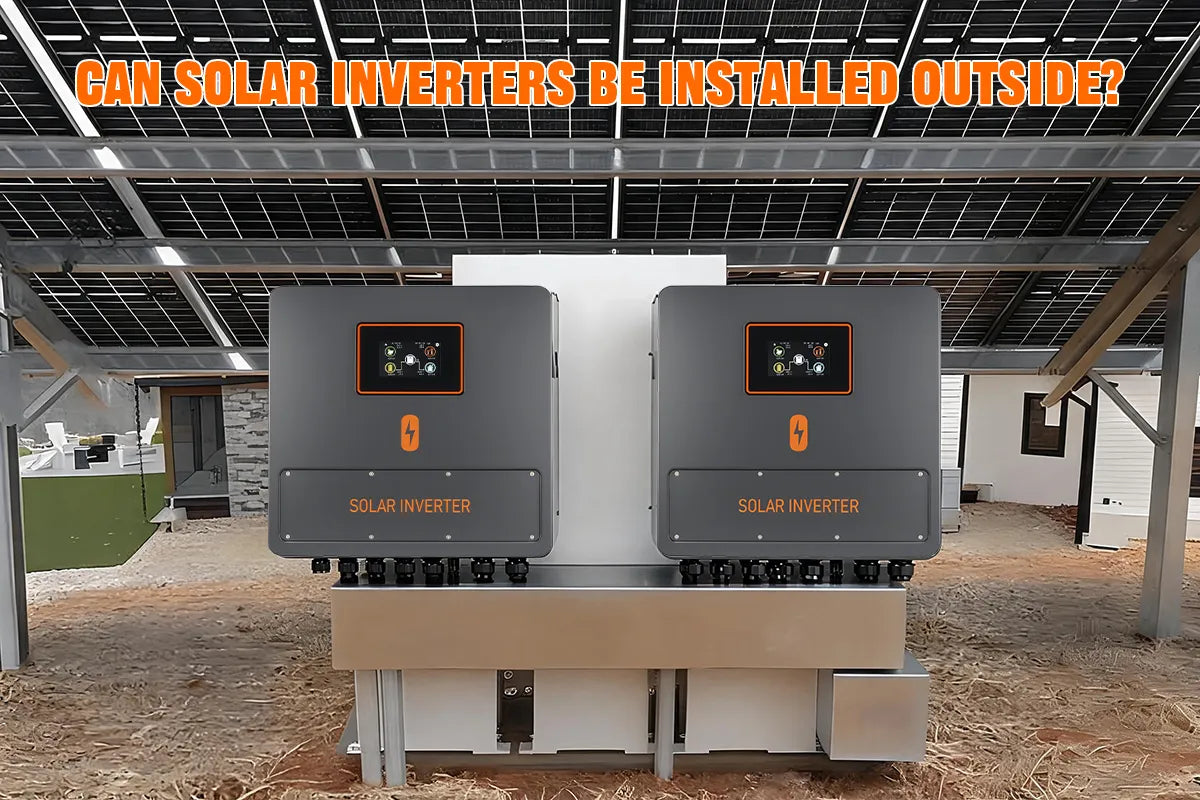
Solar inverters are considered for outdoor installation when indoor space is limited or when users want to simplify system layout and reduce installation costs. In these cases, outdoor installation may seem like a convenient solution, but it also raises concerns about long-term reliability and safety.
Users usually worry about exposure to rain, heat, and harsh weather conditions, and whether the inverter can still operate safely under these environments. In reality, not all inverters are designed for outdoor use, and factors such as protection rating, installation method, and environmental conditions all play an important role in system performance and safety.
In the following sections, we will explore which types of solar inverters can be installed outdoors and what key factors determine safe and reliable outdoor installation.
What Type of Inverters Can Be Installed Outdoors?
Not all solar inverters are suitable for outdoor installation. Whether an inverter can be used outdoors mainly depends on its IP protection rating, structural design, and heat dissipation capability. In general, only inverters with a higher protection rating, such as IP65 or above, are designed to operate reliably in outdoor environments.
In terms of system types, hybrid solar inverters are more commonly used in outdoor solar power systems, especially in farms, villas, and off-grid applications. These inverters are designed to work with battery storage systems and are typically built with stronger environmental adaptability. In contrast, many grid-tied inverters with lower protection ratings, such as IP21 All In One Inverter, are usually installed indoors or in protected enclosures, as they are not designed for long-term exposure to rain, dust, and harsh outdoor conditions.
Inverter IP Protection Rating Explained
IP (Ingress Protection) ratings define the level of protection an inverter's enclosure provides against the ingress of solid objects (like dust) and liquids (like water). Choosing the right protection level for your installation environment is critical:
- IP21 / IP20 (Indoor Use Only) : IP20 offers basic protection against solid objects larger than 12.5mm (e.g., fingers) but has no water resistance. IP21 adds protection against vertically dripping water, suitable for minimal condensation or light splashes. Both ratings are designed exclusively for dry, dust-free indoor environments such as storage rooms or electrical closets.
- IP54 (Semi-outdoor, Requires Shelter) : IP54 provides limited dust protection (no harmful deposits) and protection against water splashes from any direction. Suitable for semi-outdoor locations with overhead cover , such as under eaves or in carports. It can withstand wind-driven rain but should not be exposed to heavy downpours or high-pressure water jets.
- IP65 / IP66 (Outdoor-ready, Weatherproof) : IP65 All In One Inverter is fully dust-tight and protected against low-pressure water jets from any direction. IP66 offers a higher level of protection, capable of withstanding powerful water jets or heavy seas. Both are fully weatherproof and suitable for permanent outdoor installation without additional enclosures, whether on rooftops, ground mounts, or in coastal environments.
- IP67 (Short-term Immersion, Special Applications) : IP67 is fully dust-tight and additionally protected against temporary immersion in water (up to 1 meter depth for 30 minutes). This rating is intended for special applications , such as flood-prone areas, damp mineshafts, or extreme industrial settings requiring periodic washing. It is rarely used in standard PV projects.
PowMr Solar Inverter IP Ratings
PowMr offers solar inverters with different IP protection ratings for various installation environments. IP21 models are designed for indoor use, while IP65 models provide better dust and water protection for outdoor solar installations.
PowMr IP21 Solar Inverters (Indoor Installation)
| Model | Power Rating | IP Rating | Recommended Installation |
|---|---|---|---|
| POW-HVM1.5K-24V | 1.5kW | IP21 | Indoor |
| POW-HVM4.5K-24V-E | 4.5kW | IP21 | Indoor |
| POW-HVM6.5KP | 6.4kW | IP21 | Indoor |
| POW-HVM11KP | 11kW | IP21 | Indoor |
| POW-HVM12KP | 12KW | IP21 | Indoor |
| POW-SPH-6KW | 6KW | IP21 | Indoor |
PowMr IP65 Solar Inverters (Suitable for Outdoor)
PowMr IP65 hybrid solar inverters are fully dustproof and resistant to rain and water jets, making them suitable for residential and commercial outdoor solar installations.
| Model | Power Rating | IP Rating | Recommended Installation |
|---|---|---|---|
| POW-ECO6K-48V | 6kW | IP65 | Outdoor |
| POW-ECO-3KW | 3kW | IP65 | Outdoor |
| POW-ECO-6KW | 6kW | IP65 | Outdoor |
| POW-ELITE6.6KW | 6.6kW | IP65 | Outdoor |
| POW-ELITE10.6KW | 10.6kW | IP65 | Outdoor |
| SOLXPOW X3-12K | 12kW | IP65 | Outdoor |
Main Risks of Outdoor Installation
Solar inverters installed outdoors face challenges such as moisture, temperature changes, lightning, corrosion, and security risks. Choosing a reliable waterproof inverter with proper protection features helps ensure stable operation in harsh outdoor environments.
Rainwater and Moisture Impact
Outdoor inverters may be exposed to rain and humidity, which can damage internal components over time. A waterproof inverter with a suitable IP rating helps prevent water and moisture damage.
Performance Reduction Caused by High Temperature
Direct sunlight and high temperatures can reduce inverter efficiency and affect component lifespan. Proper ventilation and shade installation help maintain stable performance.
Lightning and Surge Risks
Outdoor systems are more vulnerable to lightning and voltage surges. Proper grounding and surge protection devices (SPD) help protect the inverter from electrical damage.
Long-Term Corrosion Issues (Coastal or Humid Areas)
Salt, moisture, and humidity can cause corrosion in coastal areas. Inverters with durable materials and higher protection ratings offer better resistance to harsh environments.
Theft Risk
Outdoor inverters installed in farms, villas, or remote areas may face theft risks. Secure mounting brackets, anti-theft screws, and proper installation locations can improve security.
Impact of Climate Conditions on Outdoor Installation
Outdoor solar inverters must handle different environmental conditions during long-term operation. Temperature, humidity, salt mist, dust, and altitude can affect inverter performance and lifespan. Choosing a suitable outdoor solar inverter with proper protection features helps ensure reliable operation.
High Temperature (>40°C): Heat Dissipation
High temperatures may cause inverter overheating and power derating. Install the inverter in a shaded, well-ventilated area to improve heat dissipation.
Cold Weather (<-20°C): Low-Temperature Protection
Extreme cold can affect inverter startup and component performance. Choose a solar inverter with a suitable operating temperature range and condensation protection.
Rainy & Humid Areas: Waterproof Protection
Moisture and rain may damage internal components. An IP65/IP66 rated solar inverter with sealed cable connections helps prevent water damage.
Coastal Areas: Salt Mist Corrosion Protection
Salt mist can accelerate corrosion of metal parts and terminals. Use corrosion-resistant materials and inspect connections regularly.
Dusty & Sandy Areas: Dust Protection
Dust buildup can reduce cooling efficiency and affect performance. Choose a high IP-rated outdoor inverter and keep ventilation areas clean.
High-Altitude Areas: Cooling & Insulation
High altitudes can reduce heat dissipation and affect insulation performance. Select an inverter suitable for high-altitude operation and follow installation guidelines.
How to Safely Install a Solar Inverter Outdoors?
Proper installation is essential for ensuring the safety, efficiency, and long-term reliability of an outdoor solar inverter system. When installing a solar inverter outdoors, attention should be paid to installation location, wiring protection, grounding, and surge protection.
1. Choose a Suitable Installation Location
- Install the inverter in a dry, shaded, and well-ventilated area.
- Avoid direct sunlight, heavy rain exposure, and areas prone to water accumulation.
- Keep enough clearance around the inverter to ensure proper heat dissipation.
2. Use Proper Waterproof Cable Connections
- Outdoor solar inverter installations should use waterproof cable glands and sealed connectors.
- Ensure all cable entry points are properly tightened to prevent water and dust from entering.
- Protect exposed cables from UV aging and mechanical damage.
3. Install Proper Circuit Protection Devices
- Install suitable circuit breakers on the PV input, battery side, and AC output according to system requirements.
- Circuit breakers allow safe maintenance and help protect the inverter from overcurrent faults.
- For outdoor installations, additional protection devices are recommended to improve system safety.
4. Grounding and Surge Protection for Outdoor Solar Inverters
Proper grounding is a critical safety step for outdoor solar inverter installation. A reliable grounding system helps reduce electric shock risks and provides a safe path for surge currents caused by lightning or electrical faults.
Taking the PowMr 6000W 220V All in One Inverter (SKU:POW-ECO6K-48V) as an example, the grounding system should include the inverter, protection devices, solar panel mounting structure, and grounding busbar.
Typical Grounding and Protection Connection:

Grounding Connection Steps:
- Connect the PE grounding terminal of the POW-ECO6K-48V inverter to the grounding busbar using an appropriate grounding conductor.
- Connect the DC surge protector (PV SPD) grounding terminal to the grounding busbar, allowing surge voltage from the PV side to safely discharge to earth.
- Connect the AC surge protector (AC SPD) grounding terminal to the same grounding system to protect the AC side from voltage surges.
- Connect the solar panel mounting frame to the grounding busbar to reduce lightning and electrical safety risks.
- Ensure all grounding connections are tight, corrosion-resistant, and installed according to local electrical standards.
Why Grounding and Surge Protection Are Important
- Protect users from electric shock caused by insulation faults.
- Provide a safe discharge path for lightning-induced surge voltage.
- Reduce the risk of damage to the inverter and other electrical equipment.
- Improve the overall reliability of the solar energy storage system.
5. Check Wiring and Perform Regular Maintenance
- Verify PV, battery, AC, and grounding connections before operation.
- Regularly inspect cable terminals, waterproof seals, grounding points, and surge protection devices.
- Keep ventilation areas clean to maintain stable inverter operation.