

Inverter Installation & System Basics
What Does a Solar Inverter System Include?
A typical hybrid solar inverter system includes solar panels, a battery bank, grid or generator input, AC loads, and the inverter itself. Solar panels provide DC power, the battery stores energy, the grid or generator can provide backup charging, and the inverter converts energy into AC power for household or business loads.
What should I check before installing a solar inverter?
Check the inverter power rating, battery voltage, PV input voltage, AC output type, cable size, breaker rating, grounding method, installation location, and local electrical code requirements.
Do I need a breaker between solar panels and the inverter?
Yes, a suitable PV breaker is recommended to disconnect the solar array safely during installation, maintenance, or emergency situations.
Why does PV open-circuit voltage matter?
PV open-circuit voltage increases when panels are connected in series. If the total Voc exceeds the inverter’s maximum PV input voltage, the inverter may be damaged.
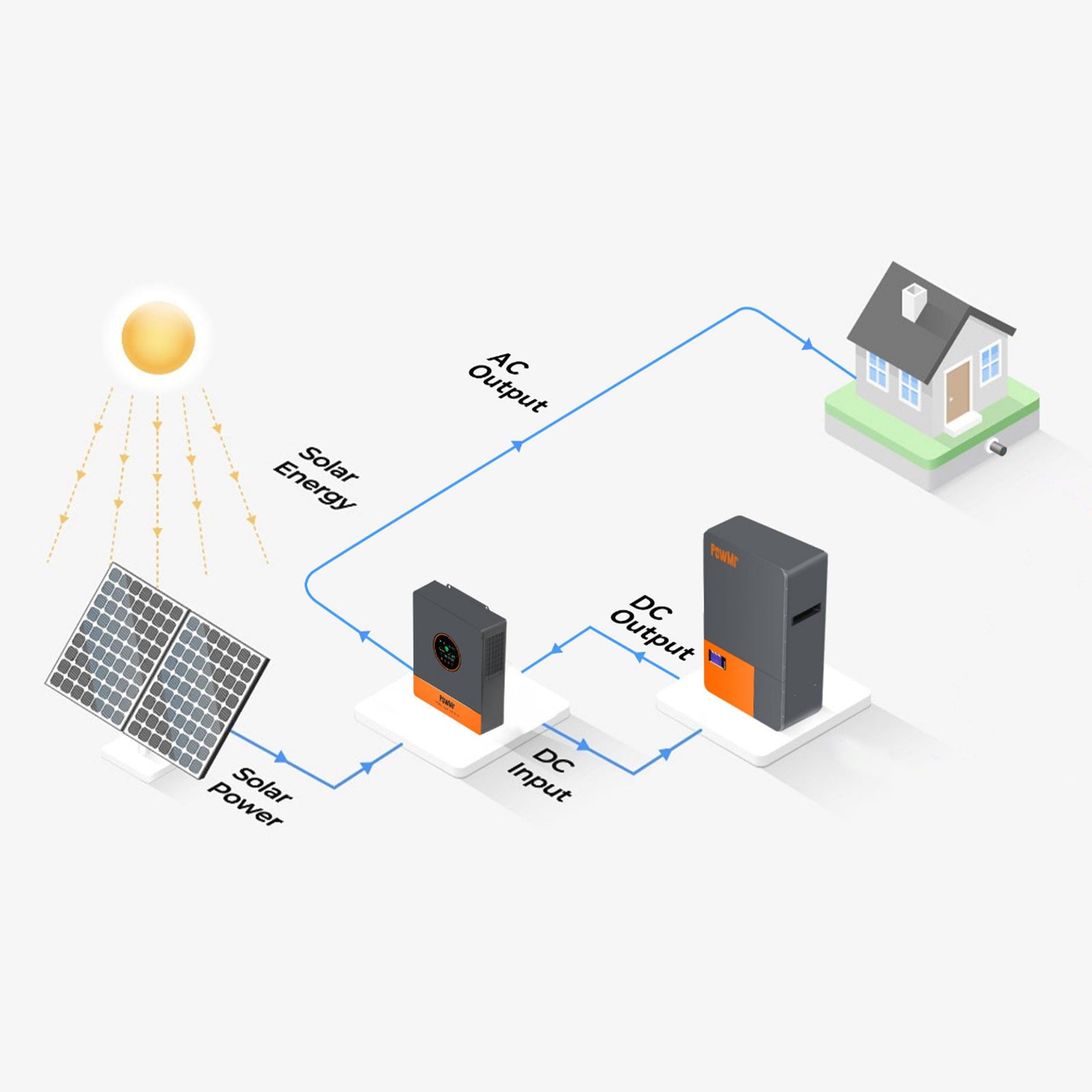
Build the Right Inverter System
- Solar Input:Powers loads and charges the battery.
- Battery Storage:Supplies power when solar or grid is unavailable.
- Grid / Generator:Provides backup power and battery charging.
- AC Loads:Powers home appliances like lights, refrigerators, and air conditioners.
Build the Right Inverter System
- Solar Input:Powers loads and charges the battery.
- Battery Storage:Supplies power when solar or grid is unavailable.
- Grid / Generator:Provides backup power and battery charging.
- AC Loads:Powers home appliances like lights, refrigerators, and air conditioners.
Solar Inverter Installation Guide
Follow this step-by-step solar inverter installation guide to plan your PV input, connect the battery and AC wiring, and configure the inverter settings safely.
Plan Your System
Solar panel voltage and total wattage
Lead-acid / Lithium / LiFePO₄ battery
110V/120V; 220V/230V AC
Confirm the total power of your appliances
Connect the System
Connect solar panels to the PV input terminals
Connect the battery with correct polarity
Grid or generator power
Connect household appliances
Configure & Commission
Select the correct battery type and capacity
Set solar, grid, or hybrid charging priority
Choose the working mode based on your power needs
Check voltage, current, and safety parameters
Solar Inverter Installation Requirements
Indoor and outdoor setup conditions for safe inverter installation, proper ventilation, heat dissipation, weather protection, and long-term system reliability.
Indoor Installation
Install the solar inverter in a clean, dry indoor area away from moisture and water exposure
Keep enough space around the inverter for heat dissipation and stable operation
Both sides: ≥200 mm; Top: ≥500 mm
Keep the inverter away from direct heat sources, flammable materials, and corrosive gases
Leave enough space for cable connection, system inspection, and future maintenance
Outdoor Installation
Install the inverter under a shelter to avoid direct rain, strong sunlight, and long-term UV exposure
Use a waterproof cover or protective cabinet if the inverter is installed in a semi-outdoor area
Mount the inverter on a firm, flat, and secure wall or support structure
Avoid areas with heavy dust, sand, strong wind, or poor air circulation
Outdoor Solar System Setup Guide for Beginners
Learn how to plan, connect, and configure your inverter system for reliable off-grid or backup power.

Solar Inverter Installation Mistakes: What to Avoid Before Wiring Your System
Avoid common solar inverter wiring, battery, PV input, grounding, and parallel setup mistakes before installation.
Safety & Protection Mistakes
Risk overheating or poor protection
May exceed system limits
May damage key system components
Increases electric shock and safety risks
Small animals may cause short circuits
May cause system faults or equipment failure
Installation & Maintenance Mistakes
May affect parallel system performance
Makes troubleshooting harder
Reduces power generation
May damage panel surface
May affect inverter cooling and lifespan
May damage or shorten battery life
Configuration & Compatibility Mistakes
May overload the controller, inverter, or battery
May exceed the inverter input limit and cause damage
May fail to meet inverter or system power needs
May prevent successful inverter app connection
May cause parallel communication failure