
Glass Solar Panels for Home, Commercial & Off-Grid Systems
High-power glass solar panels from 460W to 720W for residential, commercial, and off-grid solar systems. Tempered glass, high-efficiency monocrystalline cells, and a corrosion-resistant aluminum frame built to handle wind, snow, and extreme sun — year after year. More watts per panel means fewer panels, less hardware, and faster ROI.
What Is a Glass Solar Panel?
A glass solar panel is a rigid photovoltaic module in which solar cells are protected by a layer of tempered glass. The glass allows sunlight to reach the cells while helping protect them from rain, dust, wind, hail, moisture, and mechanical impact.
Most rigid glass solar panels also include an aluminum frame, encapsulation material, a backsheet or second glass layer, and a junction box. Compared with flexible solar panels, glass panels are heavier but generally better suited to permanent rooftop, ground-mount, and commercial installations.
Durable Tempered Glass
Tempered solar glass provides reliable protection against weather exposure and everyday outdoor conditions.
High Power Output
High-wattage modules generate more power from each panel, making them suitable for residential, commercial, agricultural, and off-grid arrays.
Long-Term Installation
Rigid construction makes glass panels suitable for permanent rooftop and ground-mounted solar systems.
Compatible with Solar Inverters
Glass solar panels can be connected to compatible MPPT solar inverters, charge controllers, battery systems, and grid-connected equipment.
Suitable for Large Arrays
Available power ratings from 460W to 720W support systems ranging from home backup power to larger commercial installations.
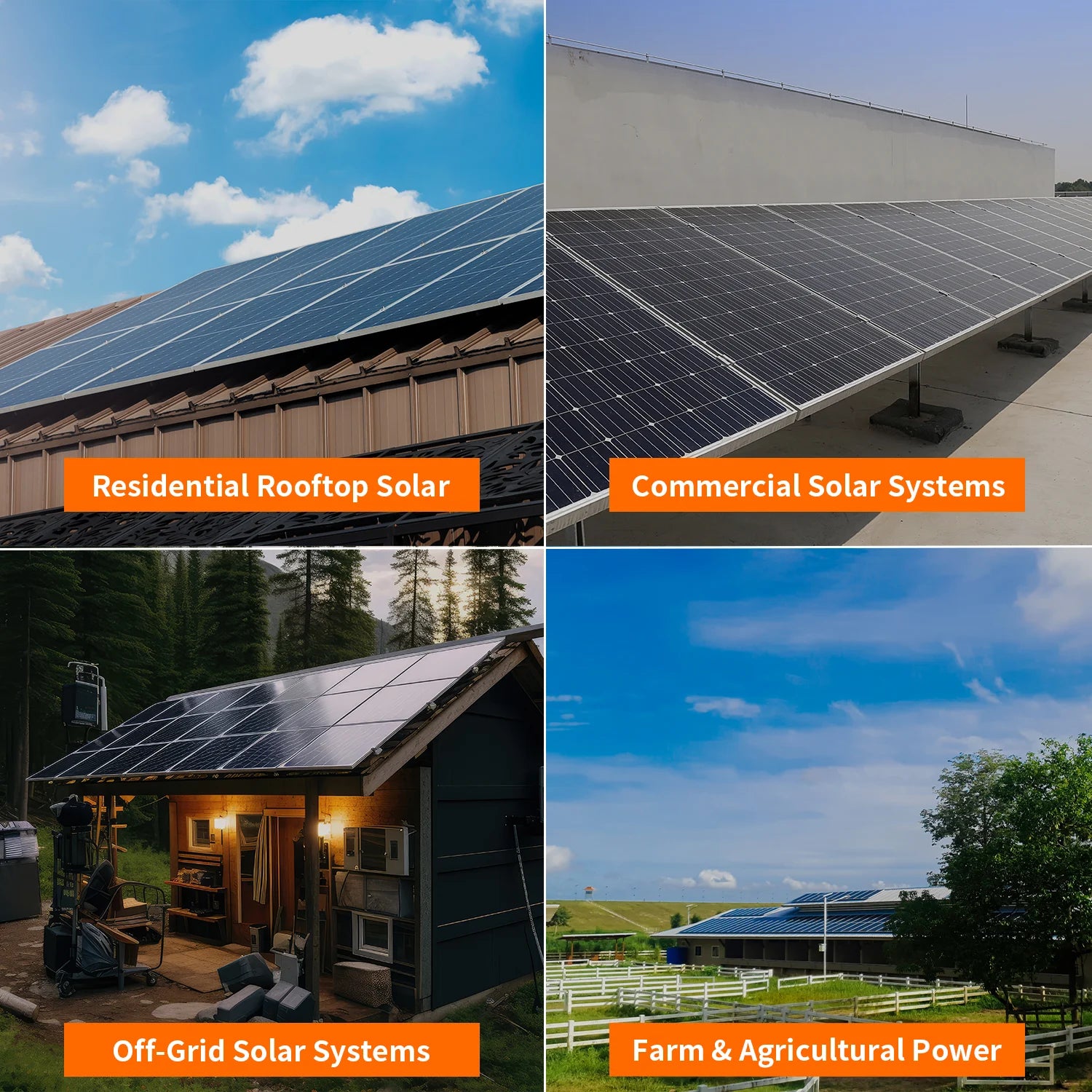
Where Can Glass Solar Panels Be Used?
Residential Rooftop Solar
Power homes while reducing dependence on utility electricity.
Commercial Solar Systems
Build higher-capacity rooftop or ground-mounted arrays for offices, warehouses, and shops.
Farm & Agricultural Power
Supply energy for irrigation systems, pumps, lighting, and farm equipment when matched with suitable system components.
Off-Grid Solar Systems
Charge batteries and power cabins, workshops, remote properties, and backup energy systems.
Filters
4 products
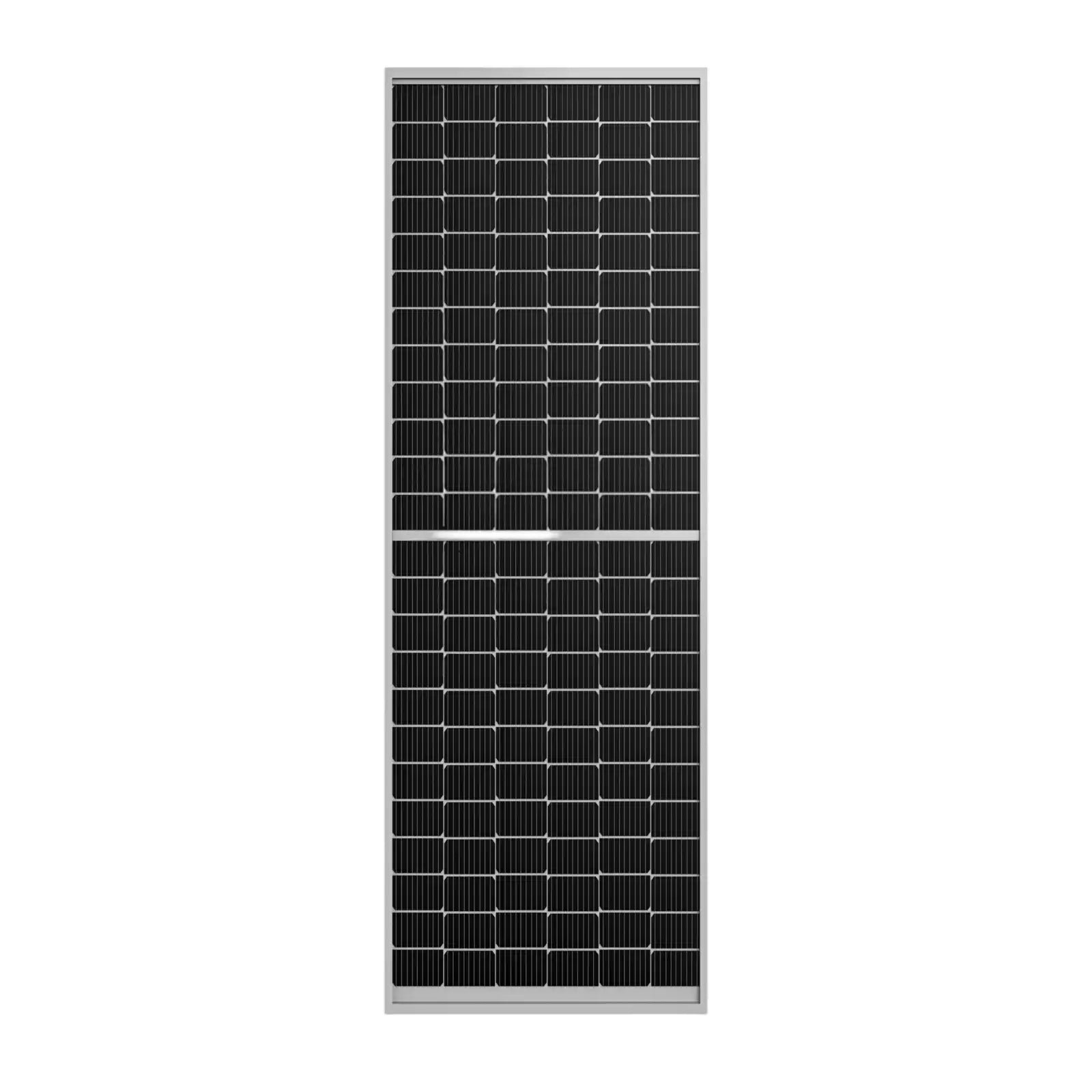
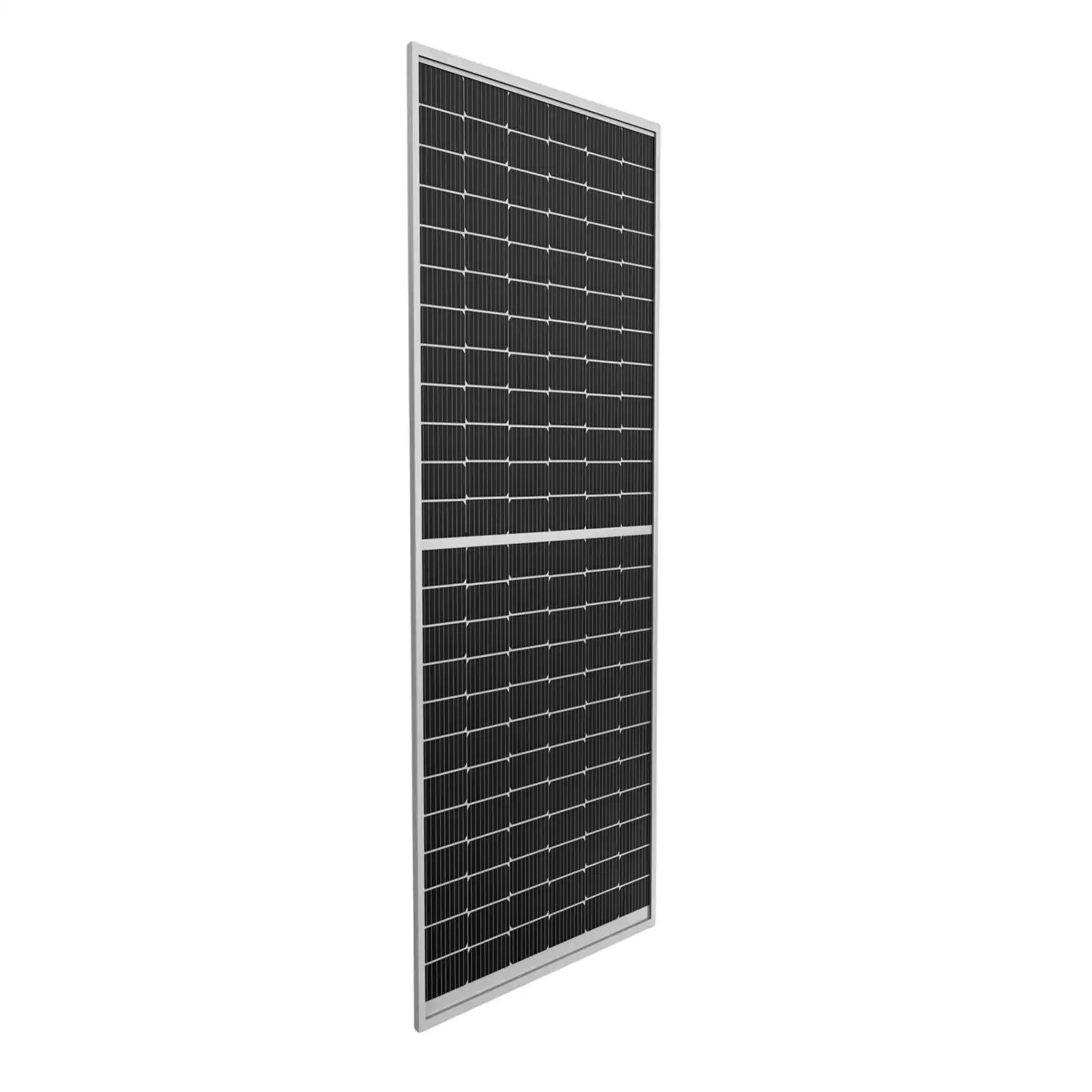
High Efficiency 460W TOPCon Single Glass Half Cell Solar Panel (2PCS)
High Efficiency 590W TOPCon Double Glass Half Cell Solar Panel (2PCS)
High Efficiency 650W TOPCon Double Glass Half Cell Solar Panel (2PCS)
High Efficiency 720W TOPCon Double Glass Half Cell Solar Panel (2PCS)
How to Match Glass Solar Panels with an Inverter
Solar panels must be configured according to the inverter’s MPPT operating voltage, maximum PV open-circuit voltage, maximum input current, and recommended PV array power.
When panels are connected in series, their voltages are added while the current remains approximately the same. When identical strings are connected in parallel, the current is added while the voltage remains approximately the same.
FAQ
How do I match solar panels with an inverter?
Check the panel’s Voc, Vmp, Isc and Imp against the inverter’s MPPT voltage range, maximum PV voltage, input-current limit and recommended solar-array power.
Should solar panels be connected in series or parallel?
Series connections increase the total voltage while the current stays approximately the same. Parallel connections increase the total current while the voltage stays approximately the same. The configuration must remain within the inverter’s PV input limits.
Can glass solar panels charge batteries directly?
A solar charge controller or solar inverter with a built-in MPPT controller is normally required between the panels and the battery. Do not connect panels directly to a battery unless the system is specifically designed for it.
Do solar panels still work on cloudy days?
Yes, but their output will be lower because less sunlight reaches the solar cells. Actual production also depends on shading, panel angle, temperature and system losses.