
When building a solar power system, connecting solar panels in parallel is a practical way to increase current while keeping voltage constant. This setup is common in 12V or 24V systems where you want to safely charge batteries or run low-voltage inverters. In this guide, we’ll walk you through how to connect solar panels in parallel, including wiring diagrams, safety tips, and key technical insights.
What does it mean to connect solar panels in parallel
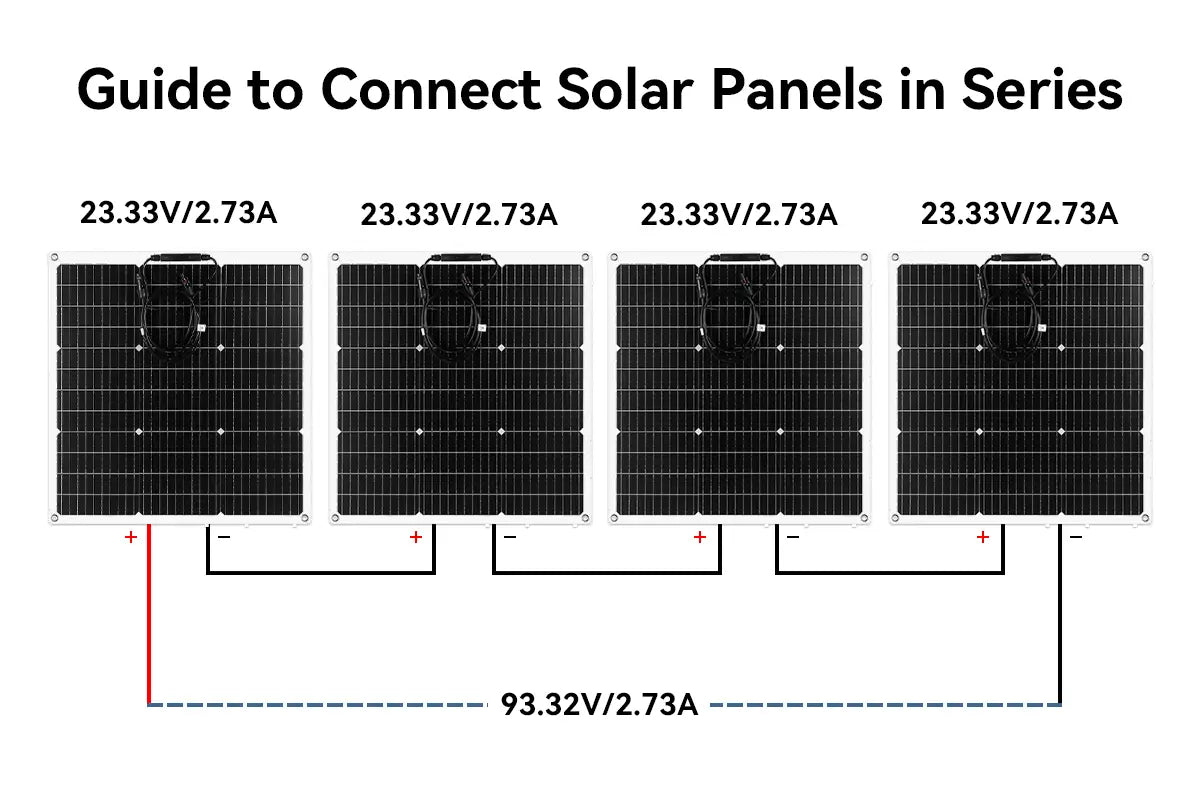
When we talk about connecting solar panels in parallel, we're referring to a configuration where all the positive terminals of the panels are connected together, and all the negative terminals are connected together. This creates a circuit in which the voltage remains the same as a single panel, while the total current output increases with each additional panel.
For example, connecting four 12V, 100W solar panels in parallel keeps the voltage at 23.33V, but increases the current from 5.45A to 21.8A.

Do you need to connect solar panels in parallel
Deciding whether to wire your solar panels in series or in parallel depends on your system’s voltage requirements, environmental conditions, and overall design goals. Parallel wiring offers several advantages, but also comes with a few limitations.
Let’s explore both sides:
Advantages of connecting solar panels in parallel
One of the biggest advantages of parallel wiring is its resilience. Since each panel operates independently, shading or failure in one panel does not significantly impact the performance of the others. This makes parallel systems more forgiving in real-world conditions where partial shading is inevitable.
Additionally, parallel setups allow you to:
- Maintain a low, battery-safe system voltage, ideal for 12V or 24V systems
- Increase charging current, which leads to faster battery recharge times
- Scale the system easily by adding more panels later without needing to rewire the entire array
- Work well with PWM controllers, which perform best when the solar panel voltage closely matches the battery voltage
Disadvantages of wiring panels in parallel
That said, a parallel configuration isn't always the most efficient choice. One of the main challenges is dealing with the increased current, which requires thicker cables and well-sized breakers or fuses to prevent overheating. Additionally, because the voltage is relatively low, voltage drop becomes more significant over long cable runs.
Other considerations include:
- Higher cable cost due to larger wire gauge requirements
- More connection points, which may increase complexity and installation time
If your system is located close to the charge controller or inverter, and you're working with low-voltage battery banks, these drawbacks are usually manageable. But in larger installations, a combination of series and parallel wiring may be more suitable.
How to connect solar panels in parallel
Now that we’ve covered the theory, let’s look at how to actually make these connections in practice. The process is straightforward but requires attention to detail to ensure safety and optimal performance.
Step1. Calculate how many solar panels can be connected in parallel
Begin by checking the label or datasheet on each solar panel to confirm that all panels have the same nominal voltage rating.
There are two key factors that determine the upper limit on how many solar panels you can connect in parallel without risking damage or shutdown of your equipment:
1. Total wattage limit
The combined wattage of all your solar panels connected together must not exceed the maximum PV input power rating of your inverter or charge controller.
2. Total current limit
Since wiring panels in parallel sums up their currents, the total short-circuit current (Isc) of the solar array must not exceed the maximum input current rating of your inverter or charge controller.
For example, if you're using a 25A solar charge controller rated for input voltages below 60V, and each 50W solar panel has a short-circuit current (Isc) of 2.73A, then you can safely connect up to 9pcs.
Step2. Arrange the solar panels and prepare requirements
After confirming the number of parallel panels, plan the layout and prepare accessories for safe solar wiring.
- MC4 Branch Connectors (e.g., 2-to-1, 3-to-1 types) or a combiner box with integrated busbars to join multiple solar panels in parallel neatly and safely.
-
Cable of appropriate gauge, rated for the total current flowing through the parallel circuit.
- A DC disconnect switch is used to safely shut off the solar input during maintenance or emergencies, as required by electrical safety standards in many regions.
Step 3. Connect the solar panels in parallel
With your system layout planned and components ready, connect all the positive terminals of the panels together and all the negative terminals together. Always double-check the polarity before connecting, and make sure all connections are tight and weatherproof.
Step4. Connect to charge controller and power on safely
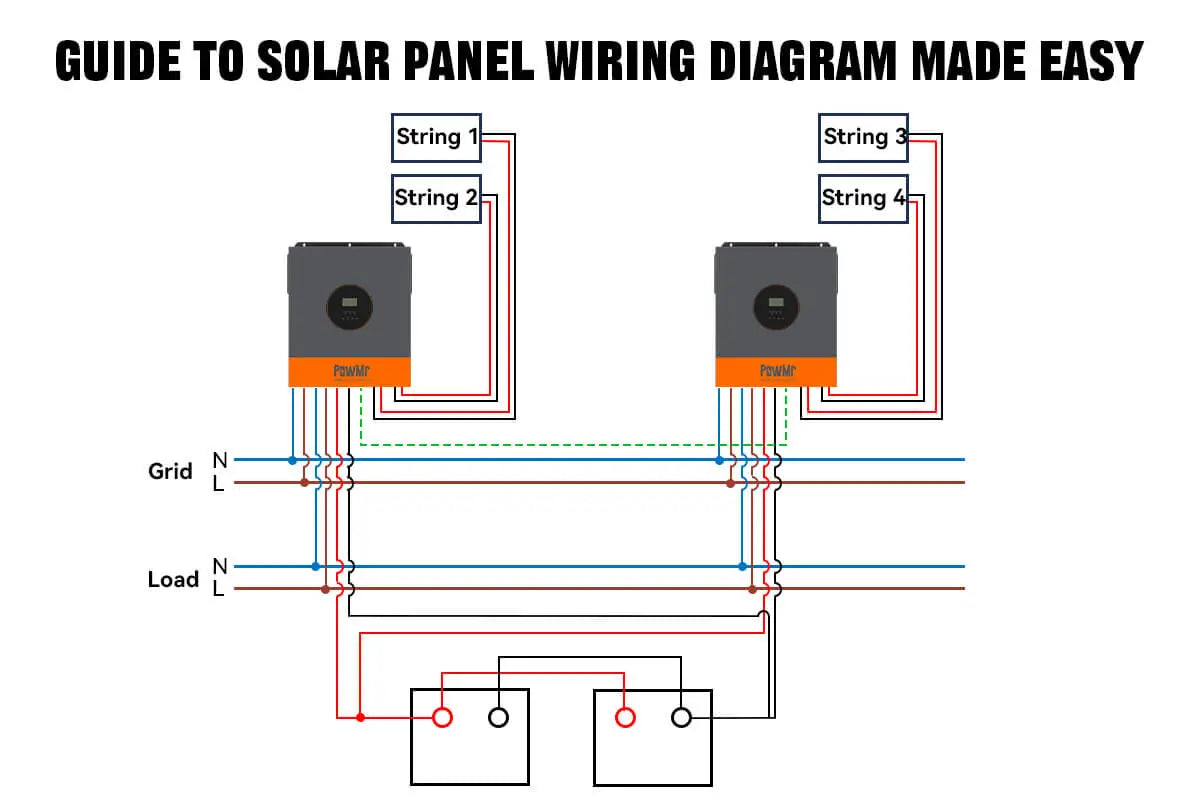
Connect the combined positive and negative PV output to the solar input terminals of the charge controller. Use a DC circuit breaker between them for added safety. When powering on, first close the battery breaker, then the PV array breaker, to ensure proper system initialization and avoid startup errors.
FAQs on connecting solar panels in parallel
Can you connect different wattage solar panels in parallel
It’s always best to use solar panels with the same voltage, current, wattage ratings and from the same brand when wiring in parallel.
Matching specifications ensures balanced current sharing, maximum efficiency, and reduced risk of mismatch losses. Panels from different brands may respond differently to sunlight, shading, or temperature, leading to poor performance or system imbalance.
As a last resort, you can connect solar panels of different wattages in parallel, only if they have the same voltage rating. This minimizes inefficiencies and avoids backflow issues, but it's not recommended unless you have no other choice.
Is bypass diode needed in solar panel in parallel
No, bypass diodes are not strictly required when connecting solar panels in parallel, because each panel operates independently and feeds current to the system on its own. If one panel gets shaded or fails, it only reduces its own contribution to the total current. The rest of the panels continue producing power at full output.