
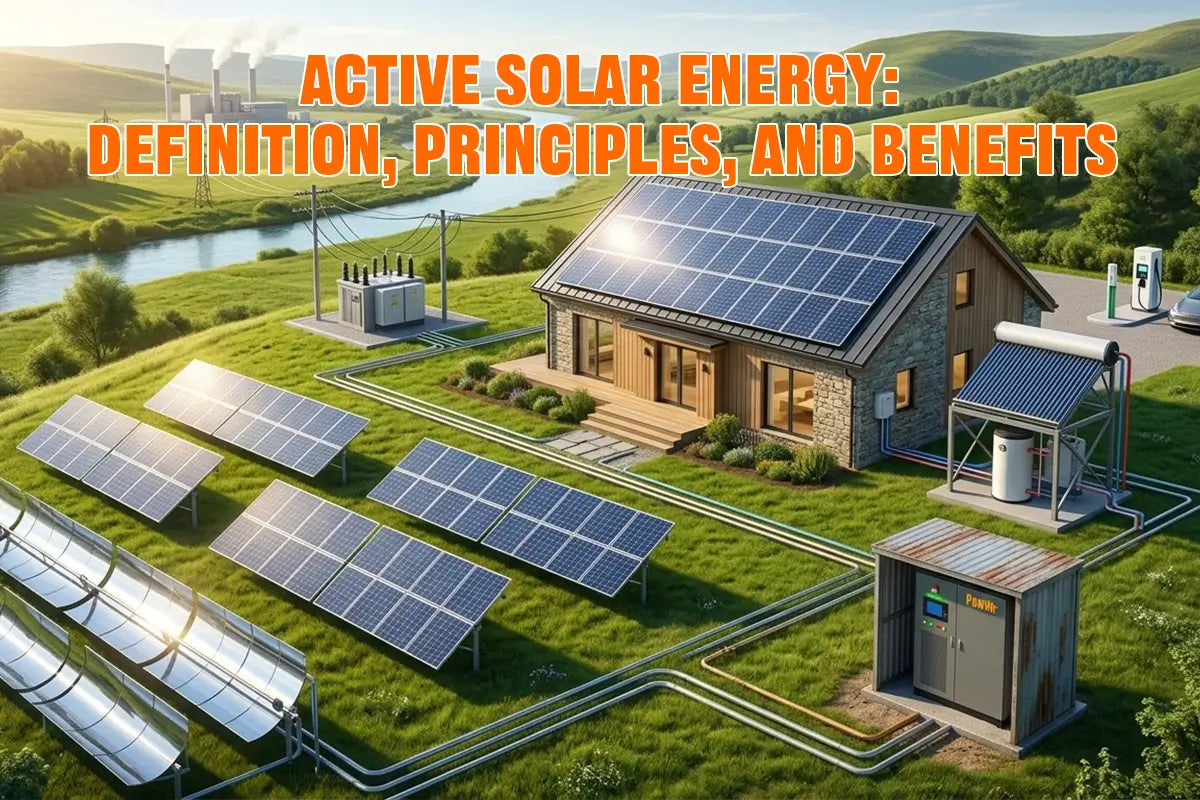
Active solar energy is a core technology in the global shift toward low-carbon energy systems. But what is active solar energy, and why is it becoming increasingly important in modern infrastructure?
At its most fundamental level, active solar energy refers to engineered systems that capture sunlight and convert it into usable heat or electricity through mechanical or electrical components such as pumps, inverters, and solar panels. Unlike passive approaches that rely on building design alone, active systems directly harvest solar radiation and actively distribute the resulting energy where it is needed.
As energy systems worldwide move away from fossil fuel dependence, active solar technologies are emerging not just as an alternative source of power, but as a foundational layer in a more distributed, efficient, and resilient energy architecture.
Definition of Solar Energy
Active solar energy refers to systems that use mechanical or electrical devices, such as pumps, fans, or solar panels, to collect, convert, and distribute sunlight into usable energy like heat or electricity. These systems require external energy input to operate and are commonly used in heating, cooling, and power generation applications.
Active vs Passive Solar Energy: What's the Difference
The word "active" carries more weight than it might initially seem. Solar energy in a broad sense simply means energy derived from sunlight, but not all solar systems work the same way. Passive solar design relies on building orientation, thermal mass, and natural airflow to harness warmth, with no moving parts and no powered equipment. It is architecture working in harmony with the sun.
Active solar energy is fundamentally different. It uses mechanical or electrical components to deliberately capture solar energy, convert it into a usable form, and distribute it to wherever it is needed. The system does not wait for heat to drift naturally through a wall; it reaches out, collects, and delivers.
The key components that define an active solar system include:
- Collectors or panels — the surfaces that intercept and absorb solar radiation
- Heat transfer fluids or semiconductors — the medium through which energy is moved or converted
- Pumps, fans, or inverters — the powered devices that circulate and condition the energy
- Controllers — the monitoring systems that regulate operation based on real-time conditions
This engineered intentionality is what makes these systems controllable, scalable, and adaptable in ways that passive approaches simply cannot replicate.
How does Active Solar Energy Works
Regardless of which technology is involved, every active solar system follows the same fundamental three-step logic: intercept sunlight, convert it into a usable form of energy, and move that energy to where it is needed. What changes from one system to the next is not this underlying structure, but the specific method of conversion and the components used to carry it out.
The collection stage always begins with a surface exposed to sunlight, whether that is a thermal collector absorbing heat or a photovoltaic panel responding to photons. The conversion stage transforms that captured solar input into something a building or grid can use, be it hot water, direct current electricity, or steam-driven mechanical motion.
Finally, the distribution stage moves that energy through pipes, wires, or ductwork to its point of use, governed by controllers that monitor conditions in real time and adjust the system's behaviour accordingly. It is this last element, the active, responsive management of energy flow, that most clearly sets these systems apart from passive alternatives.
Types of Active Solar Energy
The core working principle above plays out quite differently depending on the technology. Active solar energy is not a single system but a family of distinct approaches, each suited to different energy needs, building types, and scales of deployment. Three major types dominate the landscape today.
Solar Thermal Heat Collection
Solar thermal systems pursue heat directly. A collector mounted on a rooftop contains a fluid — typically water or a glycol mixture — that absorbs incoming solar radiation and grows hot. A pump then circulates this heated fluid through pipework to a storage tank or heat exchanger, where the warmth is transferred for domestic hot water or space heating.
A controller monitors the temperature difference between the collector and the storage tank, switching the pump on when there is useful heat to be gained and off when there is not. This responsive feedback loop is precisely what distinguishes an active thermal system from simply painting a tank black and leaving it in the sun.
Photovoltaic Electricity Generation
Photovoltaic systems pursue electricity instead. Solar panels made from semiconductor materials, most commonly silicon, absorb photons from sunlight, which dislodges electrons and generates a direct electrical current (DC). Because homes and the wider grid run on alternating current, an solar inverter converts the output before it reaches any appliance or meter.
The electricity can then be handled in three ways:
- Used immediately to power appliances and lighting on-site
- Stored in batteries for use during evenings or cloudy periods
- Exported to the grid in exchange for a feed-in tariff or credit
Concentrating Solar Power
A third approach, concentrating solar power (CSP), uses large arrays of mirrors or lenses to focus sunlight onto a small receiver, producing intense heat that drives a steam turbine connected to a generator. Because this heat can be stored in molten salt tanks, CSP plants can continue generating electricity after sunset, reducing solar power’s dependence on daylight hours.
Benefits of Active Solar Energy and Why it Matters
Active solar energy plays a critical role in the global transition toward sustainable energy systems. Its importance comes not from a single advantage, but from the combination of environmental, economic, and structural benefits that reinforce each other.
Environmental and Energy Transition Benefits
Active solar systems directly reduce dependence on fossil fuels by replacing coal, oil, and gas with clean electricity and heat. This leads to significant reductions in greenhouse gas emissions and supports global decarbonisation goals.
At scale, solar deployment helps reshape energy systems toward low-carbon infrastructure, making it a cornerstone of climate mitigation strategies.
Economic Benefits
According to IRENA's 2024 report, the global weighted average cost of utility-scale solar PV fell by 90% between 2010 and 2024, from $0.46/kWh to $0.043/kWh, making solar power 41% cheaper than the lowest-cost fossil fuel alternatives on average.
When evaluating the financial case for an active solar installation, the key considerations are:
- Upfront installation cost versus projected energy bill savings over the system's lifespan
- Available incentives, such as government subsidies, tax credits, or feed-in tariffs
- Local solar irradiance, the average sunlight hours per day at the installation's location
- System lifespan, typically 20 to 25 years for both thermal and PV technologies
Energy Security and System Resilience
Distributed solar generation spread across millions of rooftops creates an energy system that is fundamentally harder to disrupt than one relying on a handful of large power stations. A storm, a cyberattack, or a fuel shortage that compromises centralised generation has limited effect on a home already drawing power from its own panels. At a national level, broad solar deployment reduces the systemic risk that comes from dependence on any single fuel or supply route.
Conclusion
Active solar energy is, at its core, a practical response to a clear and enduring opportunity. The sun delivers an enormous quantity of energy to Earth's surface every day, and active solar systems are the engineered means by which that energy is captured, converted, and put to work.
Whether through a pump circulating heated water, a silicon panel generating electricity, or a field of mirrors focusing heat onto a turbine, the principle remains consistent: reach out deliberately, harvest what the sun freely offers, and deliver it where it is needed. As costs continue to fall and the urgency of decarbonisation grows, that principle is moving from niche adoption to mainstream infrastructure, and the transition is already well underway.


