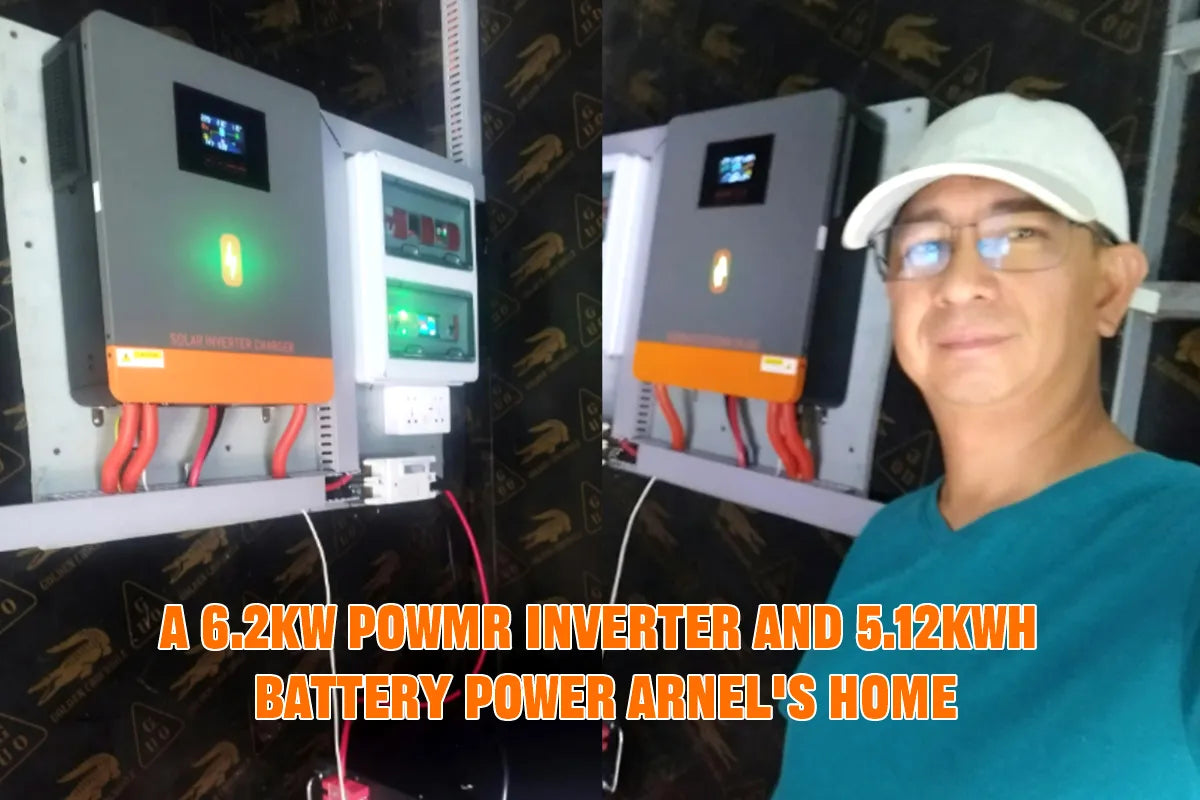
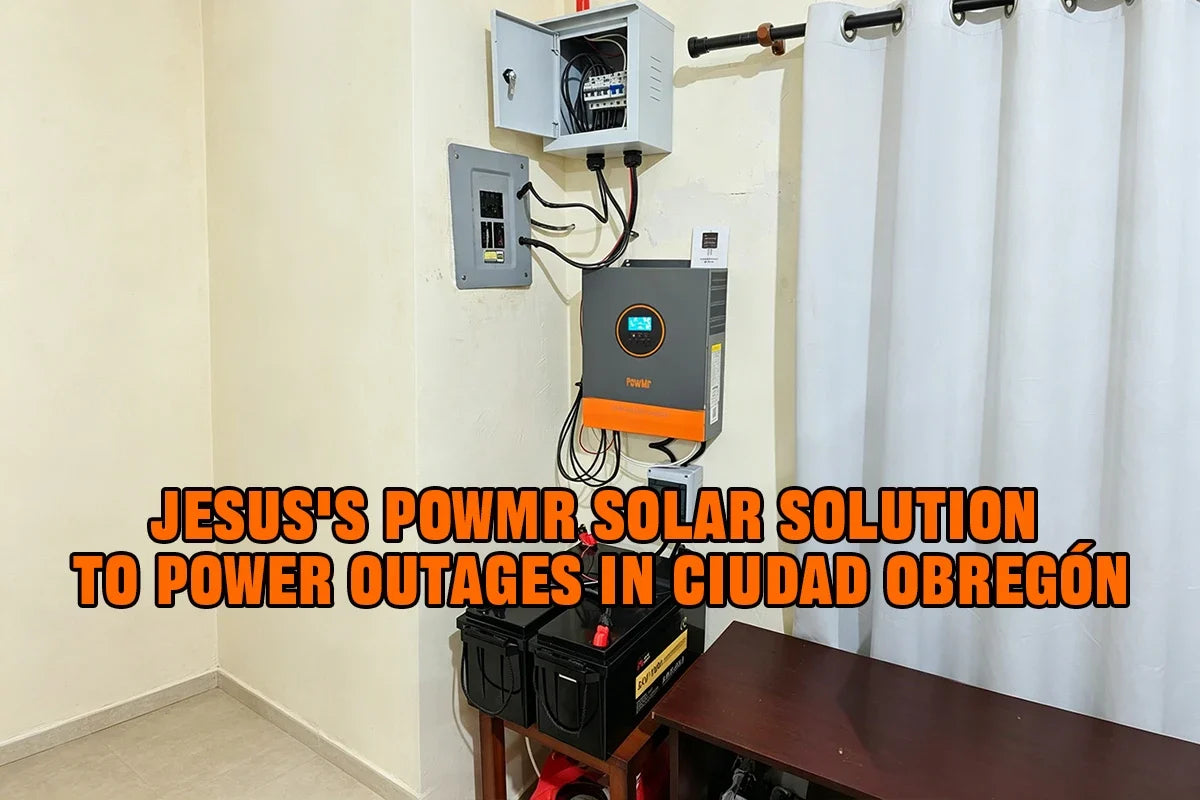
Frequent power outages in Ciudad Obregón, Sonora, Mexico, can make daily life challenging, especially during hot summer days and nighttime thunderstorms. To secure a more reliable power supply for his home, Jesus installed a PowMr 5kW solar inverter system (SKU:POW-RELAB 5KU-SPLIT), combining solar energy generation with 24V lifepo4 energy storage batteries.
His home solar backup system features three 620W TOPCon solar panels and two 25.6V 100Ah LiFePO4 lithium batteries. The solar array has a total rated capacity of 1.86kW, while the battery bank provides approximately 5.12kWh of nominal energy storage.
How Does SBU Mode Work in Jesus's Solar Power System?
With 1.86kW of solar panel capacity and approximately 5.12kWh of battery storage, Jesus also needed a practical way to manage how his home uses solar energy, stored electricity, and grid power. To achieve this, he configured his PowMr 5kW solar inverter in SBU mode (Solar → Battery → Utility), prioritizing solar energy while keeping the CFE utility grid as a backup power source.
Here's how this SBU mode setting works in his home solar backup system:
Solar Priority (Solar First): During daylight hours, the inverter prioritizes electricity generated by the three 620W TOPCon solar panels to power household appliances, helping reduce reliance on grid electricity.
Battery Backup (Battery Second): When solar generation is insufficient to meet household electricity demand, the inverter draws power from the two 25.6V 100Ah LiFePO4 batteries connected in series. Together, they form a 51.2V 100Ah battery bank with approximately 5.12kWh of nominal energy storage.
Automatic Grid Switching (Utility Backup): Jesus set the Back-to-Utility voltage to 50.8V. When the battery voltage reaches this preset threshold, the inverter switches to the CFE utility grid, helping prevent further battery discharge.
Battery Reserve for Power Outages: According to Jesus, this setting leaves approximately 38% of the battery capacity in reserve. The remaining energy provides additional backup support during nighttime power interruptions, particularly when thunderstorms disrupt the local electricity supply.
With this solar-first configuration, Jesus can make better use of daytime solar generation, manage his LiFePO4 battery storage, and retain grid power as a backup. It gives his household a more flexible power supply, helping him deal with frequent outages in Ciudad Obregón while reducing everyday dependence on the utility grid.
Electrical Connections and Wiring for a 5kW Solar Inverter System
To ensure reliable operation of his 5kW solar inverter system, Jesus selected different cable sizes according to the electrical requirements of each connection. He used 6 AWG cables for the utility grid input and household power distribution, 2 AWG cables to connect the inverter to the 48V LiFePO4 battery bank, and 8 AWG cables for the solar panel connections.
For the solar inverter wiring, the 110V live (L) and neutral (N) wires pass through a circuit breaker before entering the inverter. The inverter then supplies power to the home's main distribution panel, providing backup power for the entire property.
Proper solar inverter electrical connections help improve system reliability and reduce the risk of electrical faults. When installing a 5kW hybrid solar inverter for home use, cable sizes, circuit breakers, and electrical protection devices should be selected according to the actual operating current, cable length, battery specifications, and local electrical codes.