What size home is a 6kW solar inverter suitable for? What appliances can a 6kW solar inverter power? How many solar panels and batteries do you need for a 6kW solar inverter system? These are important questions to consider before making a purchase.
In this 6kW solar inverter buying guide, we'll help you understand how to choose and properly size a 6kW solar inverter system based on your household energy needs, solar panel configuration, and battery capacity.
Key Features of a 6kW Solar Inverter
When choosing a 6kW solar inverter, the rated output power is only one factor to consider. Depending on whether your system includes battery storage, you may need a different type of inverter.
All-in-One 6kW Solar Inverter
An all-in-one 6kW solar inverter is a practical option for homeowners and off-grid users who want to integrate solar power, battery storage, and utility power into one energy system.
This type of 6kW hybrid solar inverter can offer several important features:
- 6kW AC output to support a variety of household appliances and electrical loads.
- Solar and battery integration, allowing solar energy to power loads and charge the battery when excess power is available.
- Battery storage support, providing power when solar generation is low or unavailable.
- Multiple charging and output priority modes, helping users manage how solar, battery, and utility power are used.
- Backup power capability, depending on the system configuration and available power sources.
For users looking to increase energy independence or build a complete home solar and battery system, an all-in-one 6kW solar inverter can provide greater flexibility in managing different energy sources.
Batteryless 6kW Solar Inverter
A batteryless 6kW solar inverter is designed for users who want to use solar energy without adding a battery bank to the system.
By eliminating the need for battery storage, this type of 6kW solar power inverter can simplify the overall system and reduce the initial investment.
For example, the PowMr PVS-6KW-ECO is a 6000W batteryless solar inverter designed to convert solar power directly into usable AC electricity. With up to 6750W of PV input and a 60–450VDC MPPT voltage range, it offers flexibility when sizing and configuring a solar panel system.
Its battery-free design makes it a practical option for users who primarily want to use solar energy during the day without investing in battery storage.
Key Features include:
- No battery storage required, helping reduce battery purchase and replacement costs.
- Direct use of solar power to support connected electrical loads.
- Simpler system configuration compared with a solar system that includes battery storage.
- Suitable for daytime energy consumption, especially when loads operate primarily during periods of strong sunlight.
- Compatibility with additional power sources, depending on the inverter design and system setup.
Sizing a 6kW Solar Inverter
Determining whether a 6kW solar inverter is right for your home starts with understanding how much electricity your home appliances use—not just looking at the inverter’s rated power.
Proper 6kW solar inverter sizing should consider your everyday household power use, appliance startup demand, solar panel capacity, and whether you need battery backup.
Determine Inverter Size Based on Your Load
Start by listing the main appliances and electrical loads that may operate at the same time and add their rated power together. Common household loads include refrigerators, lights, TVs, fans, and washing machines. Appliances such as air conditioners, water pumps, and other motor-driven equipment may require significantly more power during startup.
If your maximum continuous load is below 6kW and the startup surge of your appliances remains within the inverter's peak output capability, a 6kW solar inverter can generally provide sufficient power for the system.
How Many Solar Panels Do You Need for a 6kW Inverter?
The total solar panel capacity does not necessarily have to be exactly 6kW. Proper 6kW solar panel sizing depends on the inverter's maximum PV input power, MPPT voltage range, and maximum PV input current.
For example, the PowMr PVS-6KW-ECO supports up to 6750W of PV input power. Therefore, a solar array approaching 6.75kW can be considered, provided that the PV voltage and current remain within the inverter's specified operating range.
When connecting solar panels in series or parallel, make sure the open-circuit voltage (Voc), operating voltage (Vmp), and current meet the inverter's requirements. Solar panel sizing should not be based on total wattage alone.
How Much Battery Capacity Do You Need for a 6kW Inverter?
If you are using a 6kW hybrid solar inverter with battery storage, battery size depends mainly on how much power you need and how long you want backup.
Battery capacity calculation formula:
Required Battery Capacity (kWh) = Load Power (kW) × Backup Time (h) ÷ System Efficiency
Example: If your average essential load is 3 kW and you want 4 hours of backup, and you assume 90% system efficiency:
3 kW × 4 h ÷ 0.9 = 13.3 kWh
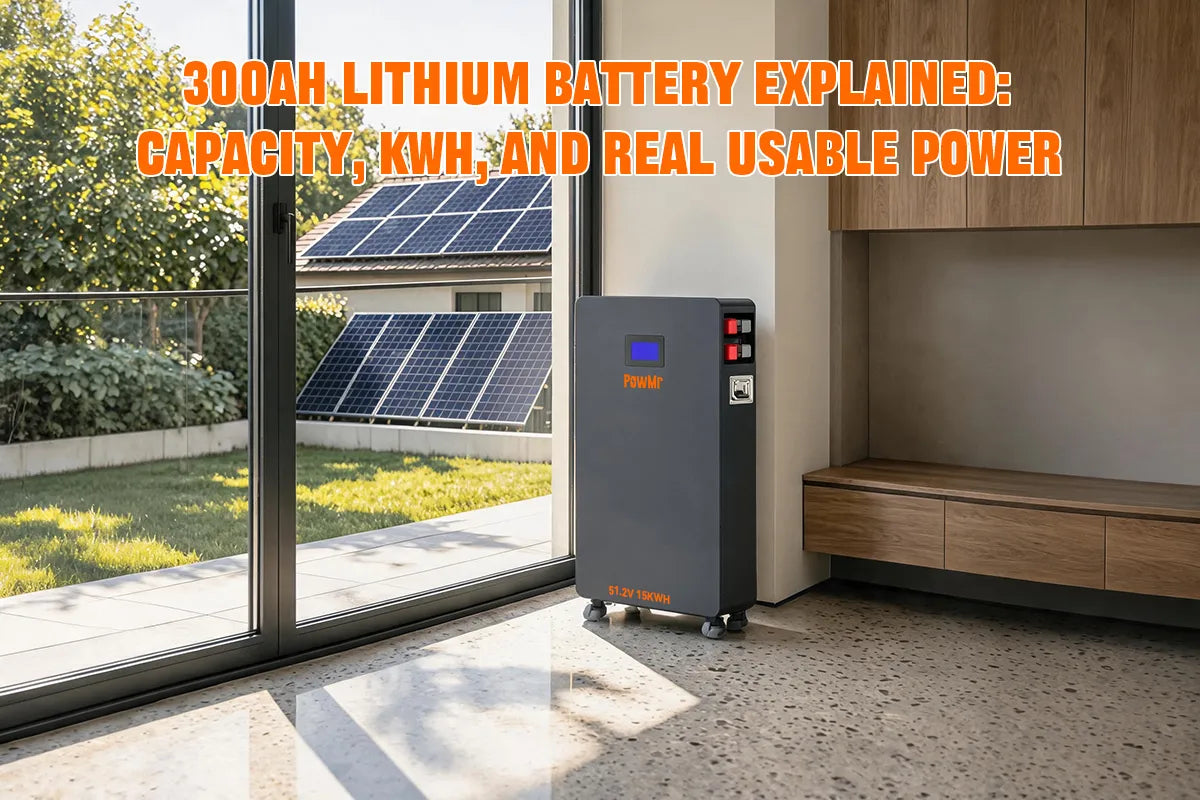
In practice, choose a usable battery bank of about 14–15 kWh to cover losses and leave some reserve. For a 48V LiFePO4 system, that is roughly a 280–300 Ah bank (usable capacity).
6kW Solar Inverter Buying Tips
- Clarify Your Setup: Need 24/7 backup and energy storage? Go with an all-in-one hybrid inverter with battery compatibility. Looking to offset utility costs without the high upfront cost of batteries? Pick a unit that supports battery-free daytime solar operation.
- Lock Down Your Voltage: Match your local power grid precisely (120V split-phase vs. 220V–240V single-phase). Voltage incompatibility is a non-negotiable issue.
- Double-Check Specs: Confirm that your solar panel string ($V_{oc}$/Amperage), 48V battery chemistry, and backup generator are fully compliant with the inverter’s input limits.
- Check Certification & Service: Opt for products backed by proven technical documentation, valid regional certifications, and accessible after-sales service.
- Buy for Scalability: Pick an inverter supporting parallel connection or high max PV input (e.g., dual MPPT up to 9,000W) so you can add panels or batteries without replacing the core unit.
PowMr 6kW Solar Inverter Models Compared
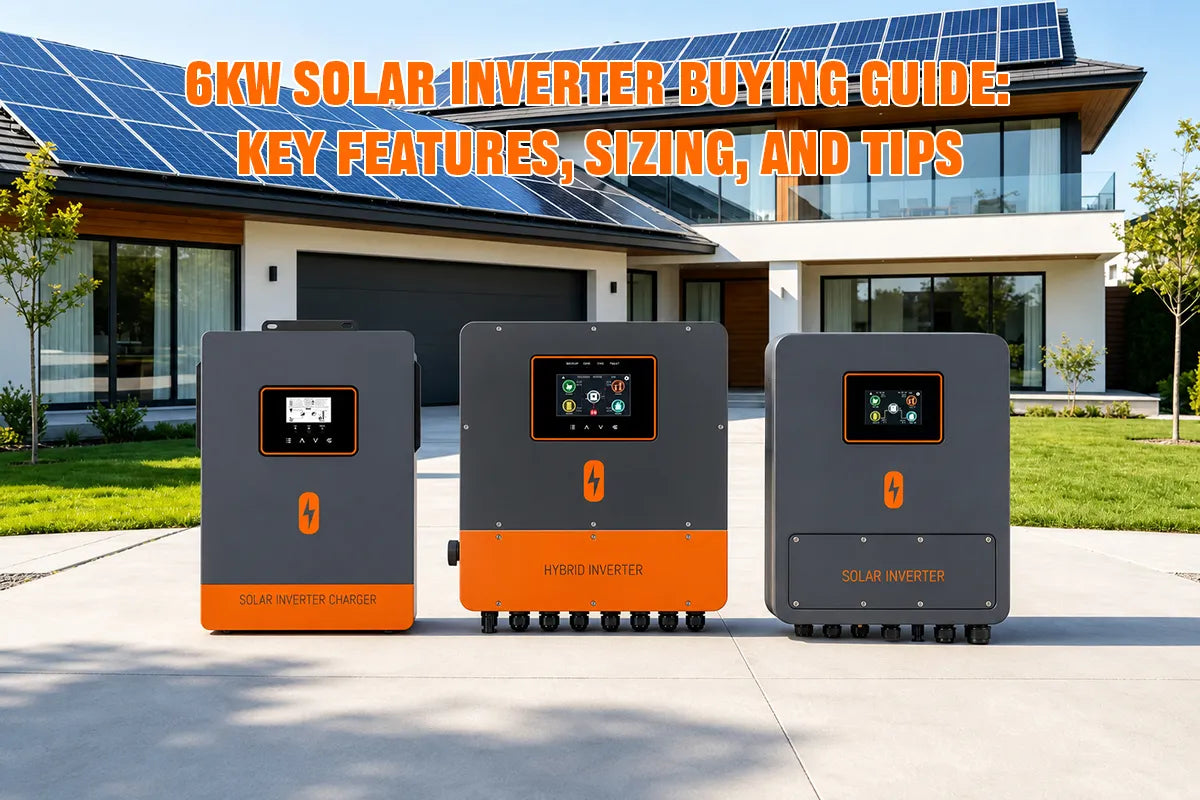
Choosing the right PowMr 6kW solar inverter depends on your system's scale and battery setup. While all three models deliver reliable 220V/230V pure sine wave power, each targets a specific off-grid application:
- 6kW Parallel All-in-One: Built for growing homes and microgrids. Features dual MPPT inputs (up to 9,000W PV) and supports up to 6 units in parallel for scalable single- or three-phase power.
- 6kW Hybrid (POW-ECO-6KW): A flexible choice for home storage systems. 6,000W output, dual MPPT (up to 9,000W PV), parallel support, and dual AC outputs (Main + EPS) to separate critical and non-essential loads during outages.
- 6kW Off-Grid Eco: Optimized for low-cost, battery-free setups. Powers daytime loads directly from solar panels, making it ideal for agricultural pumps, cabins, and workshops without upfront battery costs.
Comparison Table
| Feature | 6kW Parallel POW-SPH-6KW |
6kW Hybrid POW-ECO-6KW |
6kW Eco PVS-6KW-ECO |
|---|---|---|---|
| Rated Output | 6,000W | 6,000W | 6,000W |
| Parallel Units | Up to 6 (1/3-Phase) | Up to 6 | Standalone |
| Battery System | 48Vdc (LiFePO4/Lead) | 48Vdc (LiFePO4/Lead) | Optional / Battery-free |
| MPPT Trackers | Dual (2x) | Dual (2x) | Single (1x) |
| Max PV Input | 9,000W | 9000W | 6750W |
| PV Voltage (Voc) | 50–500 Vdc | 50–500Vdc | 60–450 Vdc |
| AC Output Ports | Single output | Dual AC outputs (Main + EPS) | Single output |
| Best Suited For | Large homes, 3-phase, future expansion | Daily home storage, smart load shedding | Remote farms, cabins, daytime work |
*All models output standard 220V/230V pure sine wave power and support WiFi/App monitoring.