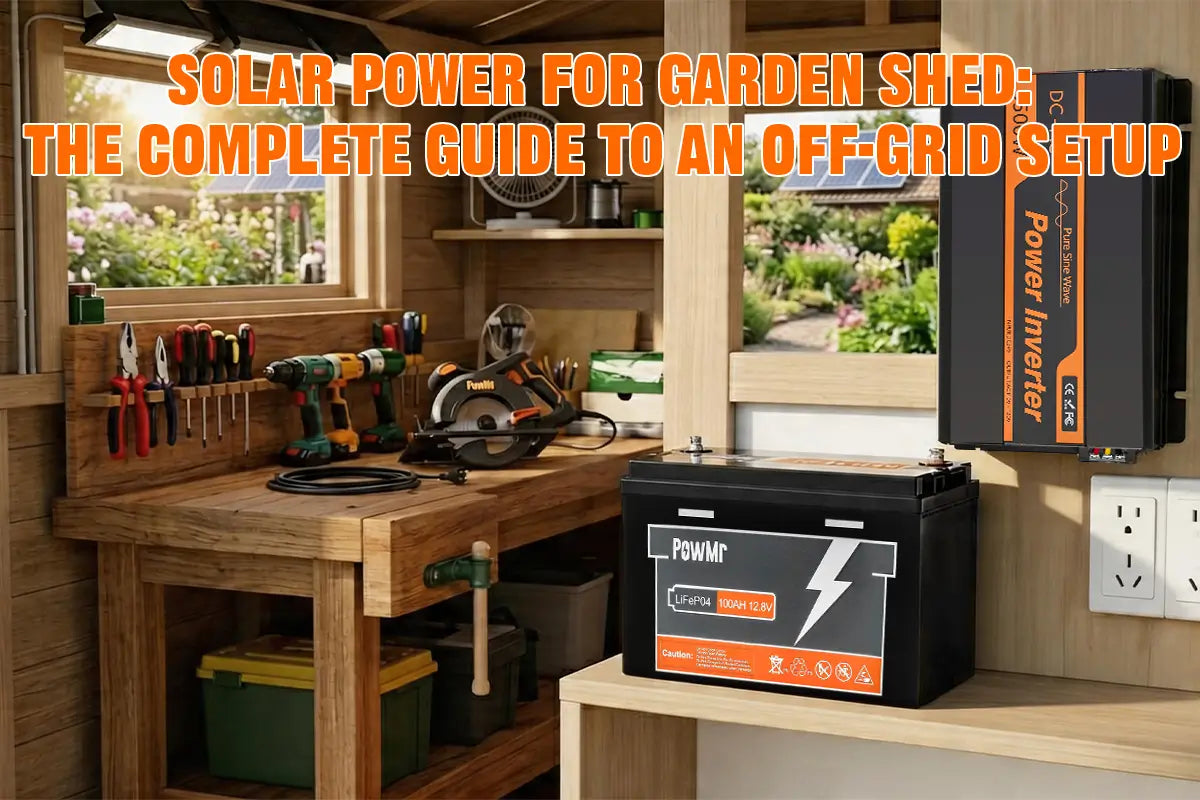
Садовий сарай — одна з найуніверсальніших споруд на будь-якій житловій ділянці. Чи служить він майстернею для вихідних столярних проєктів, робочим місцем для садівників, безпечним сховищем для інструментів і обладнання, чи навіть тихим домашнім офісом — сарай давно перестав бути просто місцем для зберігання газонокосарки.
Оскільки власники будинків вкладають більше часу та креативності в ці простори, зростає і потреба в надійному електропостачанні, і саме тут на допомогу приходить сонячна енергія.
Встановлення сонячної системи на садовому сараї пропонує привабливе поєднання практичності та сталості. Ви отримуєте доступ до електроенергії в місці, яке часто знаходиться далеко від основної електричної мережі будинку, без витрат і незручностей, пов’язаних із прокладанням кабелів по ділянці.
Ви зменшуєте залежність від електромережі, знижуєте рахунки за електроенергію та сприяєте зменшенню вуглецевого сліду, одночасно додаючи довгострокову цінність вашій власності.
Цей посібник охоплює все, що потрібно знати про живлення вашого садового сараю сонячною енергією: чи це реально, скільки енергії потребує сарай і скільки сонячних панелей вам знадобиться, щоб усе працювало.
Чи можна живити сарай від сонячної енергії?
Коротка відповідь — так, і багато власників будинків уже це роблять. Садовий сарай добре підходить для невеликої автономної сонячної системи з кількох причин.
- Сараї мають низьке енергоспоживання порівняно з будинком. Ви не живите побутову техніку, як холодильники чи пральні машини. Типове використання включає освітлення, заряджання пристроїв, роботу невеликих інструментів або вентилятора. Це означає, що зазвичай достатньо невеликої сонячної системи.
- Дахи сараїв часто розташовані на відкритих ділянках з добрим сонячним освітленням і меншими перешкодами, ніж дахи будинків, що підвищує ефективність сонячної енергії.
- Сонячна система для сараю зазвичай є автономною, тому їй не потрібно підключення до електричного щита будинку або до мережі електропостачання. Це спрощує монтаж, зменшує потребу в дозволах у багатьох регіонах і знижує витрати. Базову систему часто можна встановити за короткий час за допомогою стандартних інструментів.
Є певні обмеження. Сильна тінь від дерев або сусідніх будівель може знизити продуктивність. Потужні пристрої, такі як кондиціонери або великі обігрівачі, потребують значно більшої системи.
Для більшості поширених випадків використання сараю сонячна енергія є практичним і ефективним рішенням.
Скільки сонячної енергії потрібно для сараю?
Перед тим, як придбати будь-яке обладнання, потрібно розрахувати фактичне енергоспоживання вашого сараю. Цей крок є критично важливим, оскільки надмірне збільшення потужності системи призводить до марнотратства грошей, а недостатня потужність залишає вас розчарованими через нестачу енергії.
Почніть з переліку всіх електроприладів, які ви плануєте використовувати в сараї. Для кожного пристрою вкажіть його потужність (зазвичай на етикетці або в інструкції) і оцініть, скільки годин на день ви його використовуватимете. Помножте потужність на години, щоб отримати ват-години на день.
Ось реалістичний приклад для майстерні-сараю для хобі:
- LED-освітлення (2 світильники по 10 Вт кожен): 20 Вт × 3 години = 60 Вт·год/день
- Електродриль (зарядний пристрій): 50 Вт × 1 година = 50 Вт·год/день
- Маленьке радіо або Bluetooth-колонка: 10 Вт × 3 години = 30 Вт·год/день
- Зарядка ноутбука або планшета: 65 Вт × 1,5 години = 97,5 Вт·год/день
- Маленький вентилятор: 30 Вт × 2 години = 60 Вт·год/день
- Загальне приблизне добове споживання: близько 300 Вт·год/день
Загалом, сарай з легким використанням, з базовим LED-освітленням і зарядкою телефону зазвичай споживає 100-200 ват-годин на день.
Сарай середнього використання з електроінструментами, лампою на робочому столі та невеликими приладами може споживати 300-600 ват-годин на день.
Інтенсивно використовуваний сарай, що слугує майстернею або офісом, може споживати 700-1500 ват-годин або більше на день.
Після оцінки добового споживання потрібно також врахувати втрати в системі. Акумулятори не є повністю ефективними, інвертори споживають частину енергії, а проводка додає незначні опори.
Зазвичай додають буфер 20-25 відсотків, щоб компенсувати ці неефективності та мати запас на похмурі дні.
Для прикладу майстерні рекомендована система має забезпечувати щонайменше 375 Вт·год корисної енергії на день, а акумуляторна батарея повинна мати ємність на один-два дні резервного живлення у похмуру погоду.
Скільки сонячних панелей потрібно для сараю?
Визначивши вашу добову потребу в енергії, ви можете розрахувати, скільки сонячних панелей вам потрібно. Розрахунок залежить від двох змінних: потужності обраних панелей і кількості годин пікового сонця у вашому регіоні на день.
Години пікового сонця означають еквівалентну кількість годин повноцінного сонячного світла (приблизно 1000 ват на квадратний метр), які ваші панелі отримують щодня.
У Сінгапурі та Південно-Східній Азії цей показник у середньому становить близько 4-5 годин на день. У Північній Європі або в хмарному кліматі він може бути лише 2,5-3,5 години. У сонячних регіонах, таких як Австралія або південний захід США, він може досягати 5-6 годин.
Використовуючи формулу: Кількість панелей = Добова потреба в енергії (Вт·год) ÷ (Потужність панелі × Години пікового сонця)
Для нашого прикладу майстерні (потрібно 375 Вт·год, 4,5 годин пікового сонця, використовуючи панелі по 100 Вт): 375 ÷ (100 × 4,5) = 375 ÷ 450 = 0,83 панелі
Округлюючи і додаючи запас безпеки, одна панель потужністю 100 Вт з легкістю покриє потреби цього сараю. Якщо ж сарай використовується інтенсивніше і потребує 600 Вт·год на день, той самий розрахунок дасть приблизно 1,3 панелі, тобто оптимальним вибором будуть дві панелі по 100 Вт.
Для практичних цілей більшість сонячних систем для житлових сараїв належать до однієї з цих поширених конфігурацій:
- 1 × 100Вт панель: Підходить для дуже легкого використання, кількох світлодіодних ламп і періодичної зарядки пристроїв.
- 2 × 100Вт панелі (або 1 × 200Вт панель): Надійний вибір для помірного використання, включно з освітленням, зарядкою невеликих електроінструментів і вентилятором.
- 3–4 × 100Вт панелей: Забезпечує надійну роботу при інтенсивнішому використанні в майстерні або домашньому офісі.
- 4–6 × 100Вт панелей: Підходить для майже безперервного використання з більшими навантаженнями, включно з невеликими приладами.
Окрім самих панелей, повна сонячна система для сараю потребує кілька додаткових компонентів.
Контролер заряду (MPPT тип переважний для ефективності) регулює потік енергії від панелей до акумулятора.
Акумуляторна батарея зберігає енергію для використання після заходу сонця або в похмурі дні; літій-залізо-фосфатні (LiFePO4) акумулятори є преміальним вибором через тривалий цикл служби та стабільну роботу, тоді як свинцево-кислотні акумулятори залишаються бюджетною альтернативою.
Інвертор перетворює збережену постійну напругу в змінну, необхідну для стандартних приладів. Нарешті, відповідна проводка, запобіжники та невелика розподільна коробка забезпечують безпеку та захист вашого обладнання.
Який розмір акумуляторної системи потрібен для сараю?
Акумуляторна батарея — це серце вашої автономної системи для сараю. Вона зберігає енергію, яку ваші панелі генерують вдень, і робить її доступною вночі, у похмурі дні або коли панелі не виробляють достатньо для негайного споживання.
Вибір правильного типу та ємності акумулятора має найбільший вплив на довгострокову надійність і цінність вашої системи.
Ємність акумулятора вимірюється в ампер-годинах (А·год). Щоб розрахувати потрібну ємність, виконайте ці кроки:
- Візьміть ваше добове споживання енергії у ват-годинах (наприклад, 375 Вт·год/день з попереднього прикладу).
- Визначте, скільки днів автономності ви хочете, тобто скільки днів система має працювати без сонячного світла. Два дні — це поширений стандарт.
- Ділити на напругу системи, зазвичай 12В або 24В, щоб конвертувати у ампер-години.
- Ділити на корисну глибину розряду, приблизно 0.8 для LiFePO4 або 0.5 для свинцево-кислотних.
Ємність акумулятора (А·год) = (Добове споживання енергії у Вт·год × Кількість днів автономності) ÷ Напруга системи (В) ÷ Глибина розряду (DoD)
Для системи з 375 Вт·год на день, 2 дня автономності, 12В системою та 80% корисною глибиною розряду для LiFePO4 достатньо акумулятора 12В 100А·год.
Це тому, що розрахункова потреба становить приблизно (375 × 2) ÷ 12 ÷ 0.8 = 78А·год, і акумулятор на 100А·год забезпечує достатній запас для втрат у системі та реальних умов.
Якщо використовувати свинцево-кислотний акумулятор з 50% корисною глибиною розряду, та сама конфігурація потребує приблизно (375 × 2) ÷ 12 ÷ 0.5 = 125А·год, тому підходить акумулятор на 150А·год.
Як обрати інвертор для сонячної системи вашого сараю
Сонячні панелі та акумулятори працюють на постійному струмі (DC), але більшість стандартних інструментів, освітлювальних приладів і побутової техніки працюють на змінному струмі (AC). Інвертор — це пристрій, який перетворює постійний струм з акумулятора у придатну змінну електроенергію для вашого сараю.
Ваш інвертор повинен бути підібраний з урахуванням як безперервного навантаження, так і пикового попиту, а інструменти для сараю часто мають дуже високі пускові вимоги.
Пристрої, такі як циркулярні пилки, повітряні компресори та садове обладнання, можуть споживати в 3–9 разів більше номінальної потужності під час запуску, тому пікова потужність є критичною і часто є обмежувальним фактором.
В результаті вам слід:
- Підрахуйте загальну робочу потужність пристроїв, які можуть працювати одночасно
- Визначте пристрій з найбільшим пусковим навантаженням (зазвичай 3–9 разів від номінальної потужності)
- Обирайте інвертор з безперервною потужністю вище очікуваного робочого навантаження
- Переконайтеся, що пікова потужність значно перевищує найвищий пусковий попит
Для більшості систем у сараї розмір інвертора залежить від того, як використовується простір. Невелика система, що живить лише світлодіодне освітлення та заряджання пристроїв, зазвичай потребує інвертора з чистою синусоїдою потужністю 500–800 Вт.
Середня майстерня, що включає кілька зарядних пристроїв для інструментів, робочий стіл і періодичне використання невеликих приладів, зазвичай потребує інвертора потужністю від 1500 до 2500 Вт.
Для сараю з великою кількістю електроінструментів, де можуть працювати циркулярні пилки, садовий інвентар або повітряні компресори, потрібна значно більша система, і рекомендується інвертор потужністю 3500 Вт і більше з високою піковою потужністю через дуже великі пускові навантаження цих інструментів.
Збирання системи разом
Вибір сумісних, правильно розмірених компонентів відокремлює розчаровуючу, ненадійну систему для сараю від такої, що працює тихо і ефективно протягом десятиліть. Практичний чеклист перед покупкою:
- Підбирайте ампераж контролера заряду відповідно до загальної потужності панелей і напруги акумулятора з запасом.
- Обирайте акумулятори LiFePO4, якщо бюджет дозволяє, або AGM свинцево-кислотні для більш економного варіанту.
- Розмір акумуляторної батареї повинен забезпечувати автономність щонайменше на два дні, враховуючи допустиму глибину розряду.
- Завжди обирайте інвертор з чистою синусоїдою, розрахований на пікові навантаження від ваших інструментів.
- Переконайтеся, що всі три компоненти використовують сумісні рівні напруги, а ваш контролер заряду підтримує правильний профіль заряджання для обраної хімії акумулятора.
Завдяки ретельному прийняттю цих рішень ваша сонячна система для сараю забезпечуватиме надійне, чисте живлення щоразу, коли ви вмикаєте вимикач.